Benefits of Humic and Fulvic Acid Supplementation in Dairy Cattle
Executive Summary
Humic substances (humic and fulvic acids) are natural organic compounds. Controlled research demonstrates that supplementation can modestly improve nutrient utilisation, milk quality, and animal health. Typical outcomes include:
Small increases in milk fat and protein percentages
Reduction in somatic cell count (SCC) and mastitis incidence
Improved rumen function and feed efficiency
Potential benefits for calf gut health and growth, with some evidence of reduced diarrhoea
Mechanistically, humic acids act by modulating rumen microbes, potentially binding dietary toxins and heavy metals, and exerting immuno-modulatory and antioxidant effects observed in vitro and in other species. Most trials (20–60 cows) report statistically significant but moderate effects. No residues or withdrawal periods are reported, but product quality control is essential to avoid contaminants.
Although most studies originate overseas, the physiological mechanisms are likely relevant to New Zealand pasture-fed dairy cows, though absolute effects on milk yield may differ due to lower production levels and variable forage quality.
Mechanisms of Action
Humic and fulvic acids interact with the ruminant digestive system in multiple ways:
Rumen Modulation
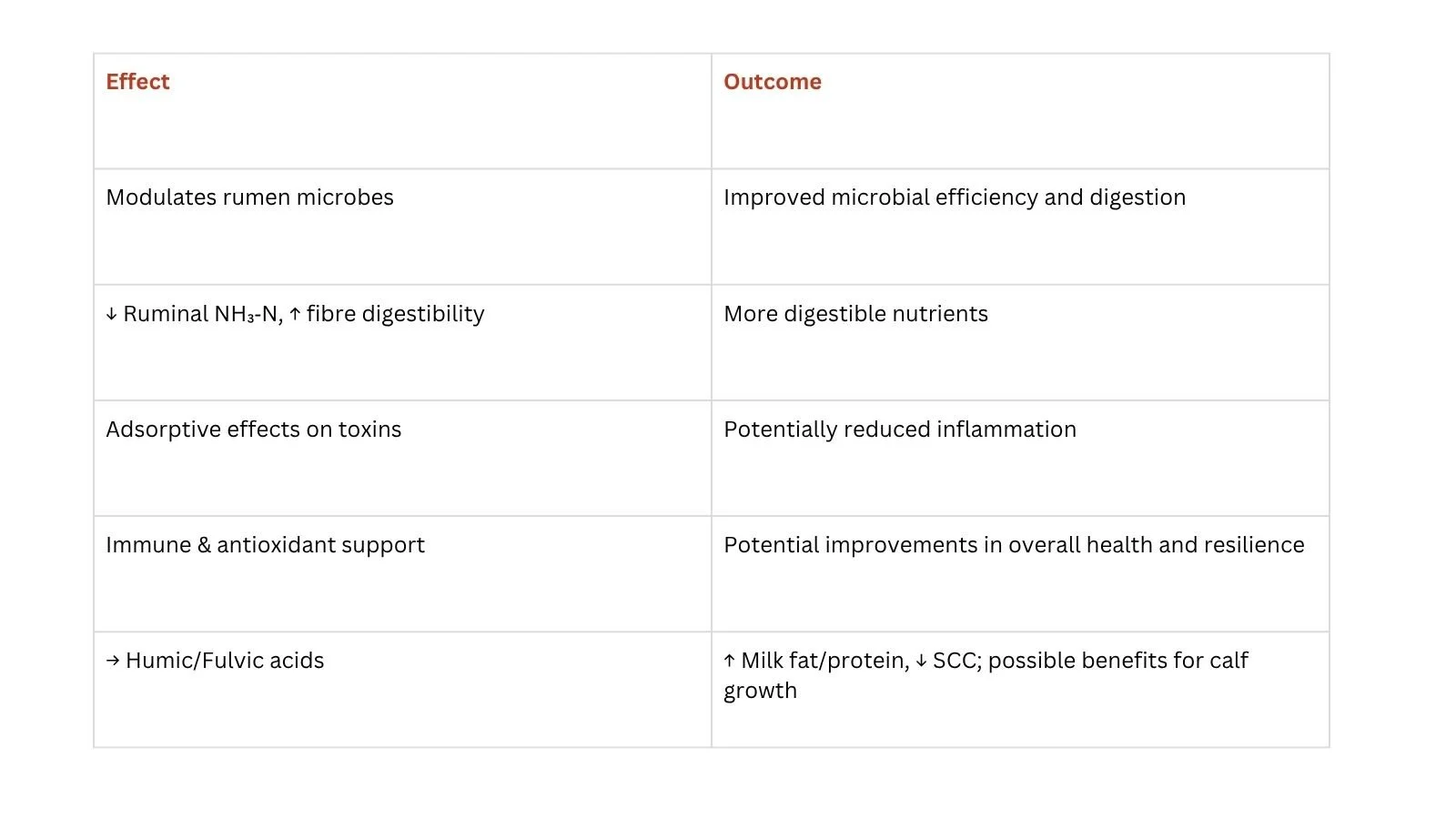
Can alter protozoal populations and ruminal ammonia (NH₃‑N)
Increase bacterial protein flow and volatile fatty acids (acetate, propionate)
Shift microbial community composition, improving crude protein digestibility
Gut Protection
May form a protective mucosal film enhancing nutrient absorption
Adsorptive properties observed in vitro and other species suggest binding of dietary toxins and bacterial endotoxins, potentially reducing oxidative stress and inflammation
Immune & Antioxidant Effects
Some studies in calves or other livestock indicate increases in immunoglobulins (IgA, IgG) and antioxidant markers (GSH-Px, SOD, T-AOC)
Reduction in pro-inflammatory cytokines (TNF-α, IL‑6) has been reported in non-cattle models
These mechanisms suggest potential benefits for gut integrity and systemic health, though controlled evidence in adult dairy cows is limited
Mechanisms of Action
Humic and fulvic acids interact with the ruminant digestive system in multiple ways:
Rumen Modulation
Can alter protozoal populations and ruminal ammonia (NH₃‑N)
Increase bacterial protein flow and volatile fatty acids (acetate, propionate)
Shift microbial community composition, improving crude protein digestibility
Gut Protection
May form a protective mucosal film enhancing nutrient absorption
Adsorptive properties observed in vitro and other species suggest binding of dietary toxins and bacterial endotoxins, potentially reducing oxidative stress and inflammation
Immune & Antioxidant Effects
Some studies in calves or other livestock indicate increases in immunoglobulins (IgA, IgG) and antioxidant markers (GSH-Px, SOD, T-AOC)
Reduction in pro-inflammatory cytokines (TNF-α, IL‑6) has been reported in non-cattle models
These mechanisms suggest potential benefits for gut integrity and systemic health, though controlled evidence in adult dairy cows is limited
Summary of Mechanistic Effects:
Milk Yield and Composition
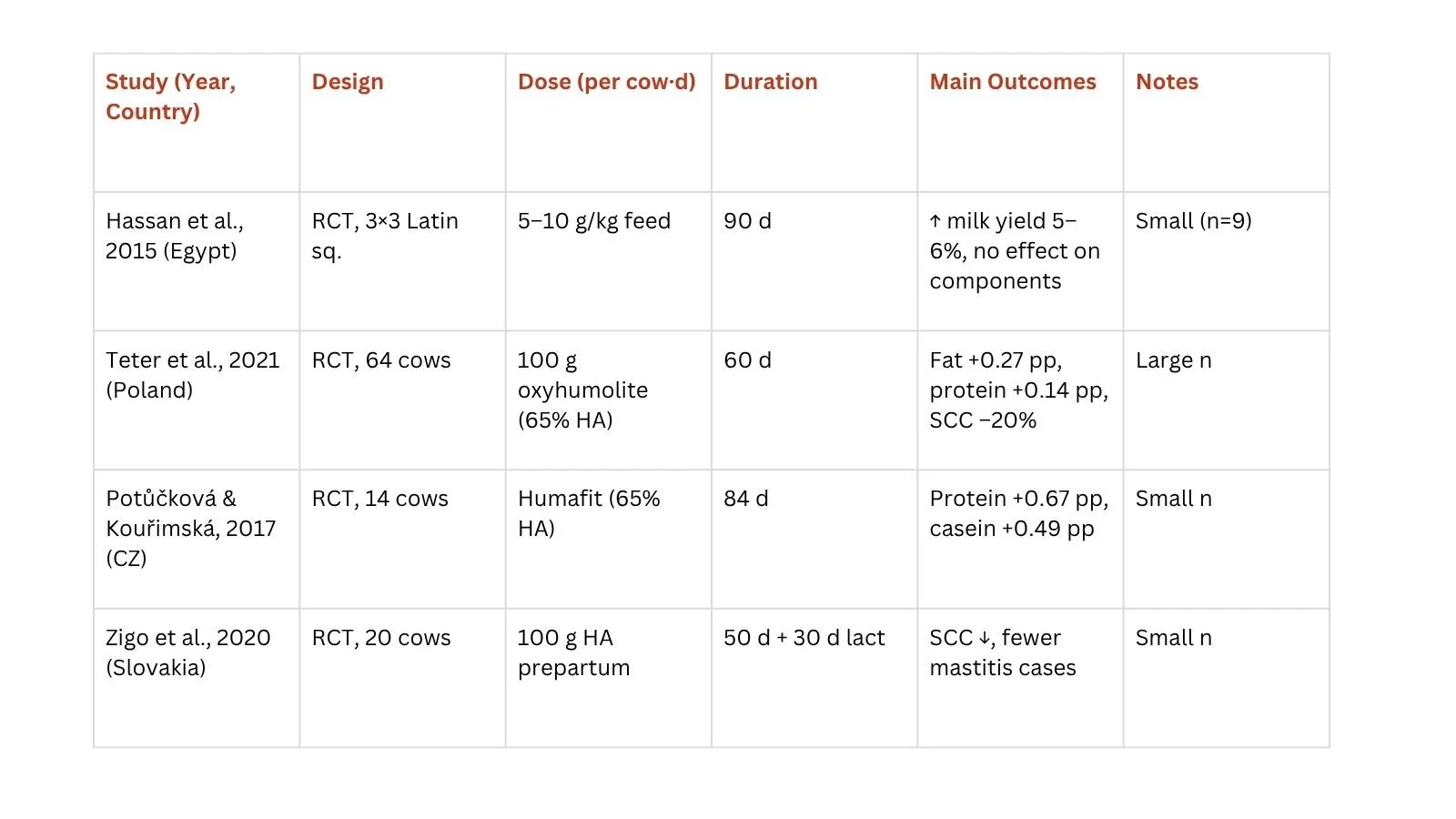
Milk volume: Effects vary by baseline production. In high-producing cows (~38 kg/d), 100 g/day humic acids (65% HA) for 60 days showed no change in total yield, but milk fat increased 0.27 pp, protein 0.14 pp, and SCC dropped 20% (Teter et al., 2021).
Lower-producing cows: Egyptian studies reported reported yield increases of +5–15 % at 20–40 g HA/cow·d (Hassan et al., 2015; Kholif et al., 2021). These values come from individual trial reports and may not generalize across all herds.
Milk quality: Protein, casein, and fat often increase modestly, and SCC reductions are consistent across trials.
NZ relevance:
New Zealand cows produce less milk per day than many trial herds, so absolute yield increases may be smaller. However, improvements in milk components and SCC remain economically meaningful, particularly under pasture-based systems.
Key Studies Summary:
Feed Intake and Efficiency
Most trials report no change in voluntary feed intake.
Feed efficiency improves in some studies due to higher nutrient digestibility (DM, NDF, starch) and increased microbial growth.
Some calf studies suggest improved average daily gain (ADG) and reduced diarrhoea, but controlled replication is limited.
Health Outcomes
Mastitis & SCC
Prepartum supplementation in some studies reduced positive quarters by 20% (Slovakia)
SCC decreases indicate improved milk hygiene and potential metabolic balance
Metabolic Disorders
Reduction in milk urea suggests improved rumen nitrogen capture
Antioxidant and immune properties observed in other species may contribute to buffering metabolic stress
Fertility
No controlled data available; any effect on fertility is speculative
Calf Health
Some studies indicate potential benefits for gut integrity, growth, and immune markers
Evidence is limited; more controlled NZ-based calf research is needed
Safety, Residues, and Regulations
Safety: No adverse effects observed; humates are natural, non-absorbed compounds
Residues: No drug residues in milk or meat
Contaminant risk: Source verification for heavy metals and mycotoxins is recommended
Regulatory: NZ has no formal approval or ban; use under farmer discretion
Research Gaps
NZ-specific trials in pasture-based systems
Effects on fertility, metabolic health, and long-term performance
Comparative efficacy of fulvic-enriched vs. humate products
Economic cost-benefit analysis in NZ dairy herds
Bottom Line
Humic and fulvic acid supplementation is a safe, natural, and scientifically supported strategy to support milk quality, feed efficiency, and animal health in dairy cows and calves. While NZ-specific trials are limited, the physiological mechanisms observed overseas are likely relevant under pasture-fed conditions, making humic/fulvic supplementation a promising addition to herd management programs.
DCT Animal Boost – NZ Relevance and Compliance
DCT Animal Boost is a humic and fulvic acid liquid supplement designed for dairy cattle. Unlike generic humic products, it has undergone a class determination by MPI, meaning it is exempt from registration requirements in New Zealand.
It is also registered with BioGro NZ, making it approved for use in certified organic systems. These regulatory clearances provide New Zealand farmers with confidence in the product’s safety, traceability, and compatibility with pasture-based and organic herds.
While efficacy is consistent with the mechanisms and benefits described in this paper (rumen modulation, improved nutrient utilisation, and potential support for milk quality and calf health), DCT Animal Boost allows farmers to trial a high-quality, locally approved humic/fulvic supplement in their own herds under NZ conditions.