Onion Quality Improved Without Increasing Fertiliser Inputs
Historical Onion Field Trial — Richmond, Nelson, New Zealand
A DCT field trial in Richmond reported maintained bulb size without increasing fertiliser inputs, alongside firmer skins, improved crop quality, stronger root development and a reduced herbicide requirement.
For a commercial crop, producing more isn't the only way to improve the result.
Quality matters.
Input efficiency matters.
And what happens below the soil surface can influence what happens at harvest.
In this historical Richmond onion trial, several commercially relevant changes were reported during the DCT programme.
Bulb Size Maintained
No Increase in Fertiliser Inputs
Firmer Skins & Improved Quality
Stronger Root Development
Less Herbicide Required
There is no longer enough historical measurement data to put precise numbers around these changes.
But the surviving trial record gives us an interesting picture of what was observed in the crop.
The Trial
The onion trial was carried out in:
Richmond, Nelson
DCT products were incorporated into the crop programme.
The objective wasn't simply to push the crop harder with additional inputs.
The trial looked at whether improving the conditions around the crop could help it make more effective use of the farming system already in place.
What Was Reported?
Bulb Size Was Maintained
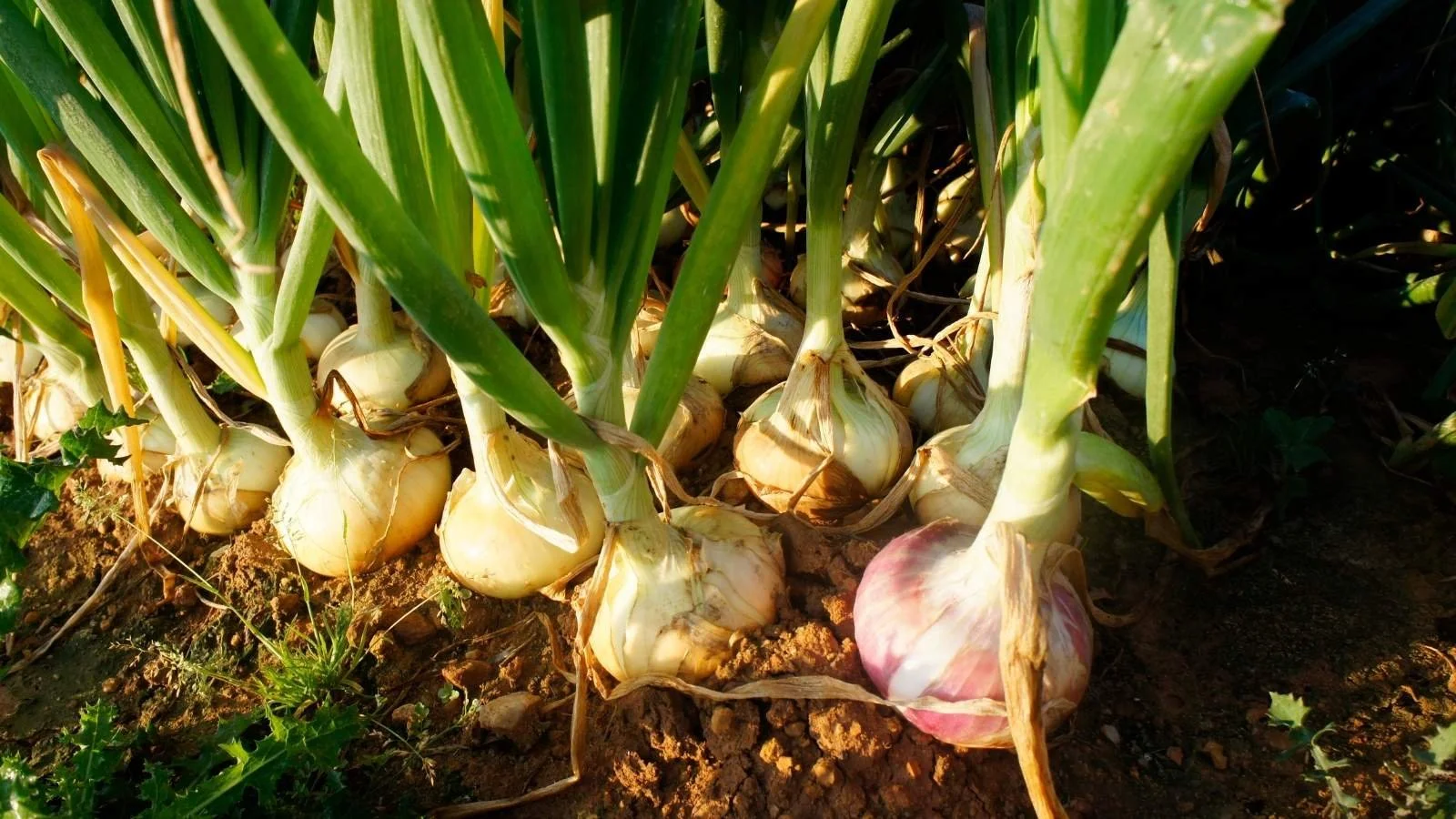
The historical trial record reports that onion bulb size was maintained without increasing fertiliser inputs.
That's an important distinction.
The result wasn't:
More Fertiliser → Same Crop
It was:
No Additional Fertiliser → Bulb Size Maintained
We no longer hold the detailed fertiliser application records from the trial, so we don't retrospectively calculate a fertiliser saving.
But the observation raises an important question around nutrient efficiency:
Can we get more from the nutrients already available to the crop before simply adding more?
Quality Improved
Bulb size wasn't the only consideration.
The trial also reported:
Firmer Onion Skins
and:
Improved Overall Quality
compared with previous onion crops grown in the same paddock.
For an onion grower, quality can be every bit as important as size.
A crop needs to produce something worth harvesting, handling, storing and selling.
This trial suggests that maintaining production didn't have to come at the expense of crop quality.
Something Was Also Changing Below Ground
Stronger root development was observed during the trial.
In particular, the historical record describes roots developing more strongly down through the soil profile.
We don't have retained root-depth measurements, so we don't turn that observation into a numerical result.
But it is agronomically relevant.
Roots determine the volume of soil a crop can explore for:
water
and:
nutrients
A more effective root system can therefore increase the opportunity for a crop to use resources already present within the soil profile.
We can't establish from the surviving evidence that root development caused the maintained bulb size or improved quality.
But the root observation gives us an important piece of the overall field picture.
Less Herbicide Was Reported to Be Required
The historical trial record also reports that less herbicide was required to manage weeds.
That's potentially commercially significant.
But we don't have the original spray records or application rates, so we don't attach a percentage reduction to it.
And we don't claim that improved soil biology suppressed weeds.
That mechanism wasn't measured.
What we can say is:
Reduced herbicide requirement was one of the practical outcomes reported during the trial.
For a grower, that is worth investigating.
Looking at the Whole Result
No individual observation tells the entire story.
Together, however, they form an interesting pattern.
Production
Bulb Size Maintained
without increasing fertiliser inputs.
Quality
Firmer Skins & Improved Onion Quality
compared with previous crops from the paddock.
Roots
Stronger Downward Root Development Observed
Crop Inputs
Less Herbicide Reported to Be Required
The opportunity wasn't simply to grow a bigger onion.
It was to improve how effectively the crop and farming system worked together.
Why Root Development Matters in Onions
Onions present an interesting challenge because their root systems are relatively shallow and limited compared with many other crops.
That makes the conditions surrounding the root system particularly important.
If roots can explore a greater volume of suitable soil, the crop has a greater opportunity to access available water and nutrients.
That doesn't prove why the Richmond trial produced the observations it did.
But it helps explain why root development is something we pay attention to.
Rather than asking only:
“What should we add to the crop?”
we also ask:
“How effectively can the crop access what's already there?”
Understanding the Trial Through the Four Pillars
DCT looks at crop performance through four connected areas:
Soil Function. Root Development. Nutrient Efficiency. Plant Performance.
This historical trial touches all four, although the strength of the evidence differs between them.
Root Development — Observed
Stronger downward root development was reported during the trial.
It wasn't numerically measured, so we treat it as a field observation.
Nutrient Efficiency — Indicated
Bulb size was reported to have been maintained without increasing fertiliser inputs.
That makes nutrient efficiency an important question raised by the trial.
However, nutrient uptake wasn't directly measured.
Plant Performance — Observed
The trial reported:
maintained bulb size
firmer skins
and:
improved overall onion quality
These are historical crop observations rather than retained quantitative measurements.
Soil Function — Relevant
Soil physical and chemical conditions influence root development, water movement and nutrient availability.
However, we don't have retained before-and-after soil measurements from this trial.
We therefore don't claim a measured soil-function change.
What This Trial Tells Us
The surviving historical trial record reports that during the DCT programme:
Bulb Size
Maintained
without increasing fertiliser inputs.
Crop Quality
Improved
with firmer onion skins reported.
Root Development
Stronger
with more downward root growth observed.
Herbicide Requirement
Reduced
according to the historical trial record.
These are commercially relevant outcomes.
But they are not all independently measured results.
That distinction matters.
About the Evidence
This is a historical DCT field trial.
The original detailed measurement, fertiliser and spray records are no longer available.
We therefore don't present the observations on this page as independently verified quantitative results.
The surviving trial record and original crop photograph provide the evidence available today.
That means we can show what was reported and observed.
We can't retrospectively create measurements that weren't retained.
Why Keep a Case Like This?
Because field observations still have value when they're presented for what they are.
This trial raises several useful questions.
Could stronger root development help an onion crop explore more of the soil profile?
Could maintaining bulb size without increasing fertiliser indicate an opportunity to improve nutrient efficiency?
Could crop quality improve without simply pushing inputs higher?
Could the overall crop programme be made more efficient?
The historical trial can't answer every one of those questions conclusively.
But the results were interesting enough to make them worth asking.
Better Farming Starts With Better Understanding
The Richmond onion trial wasn't about achieving one spectacular number.
It was about what happened across the crop.
Bulb size was maintained.
Fertiliser wasn't increased.
Skin firmness and quality improved.
Stronger root development was observed.
Less herbicide was reported to be required.
For a commercial grower, that's an interesting combination.
Because improving crop performance isn't always about adding more.
Sometimes the bigger opportunity is understanding how to get more performance and more value from the inputs you're already using.
Could Your Crop Be Making More of Its Existing Inputs?
DCT works with growers to understand how soil function, roots, nutrient efficiency and plant performance interact within the cropping system.


Continue Exploring the other foundations:
-
Root Development
Understanding how plants explore the soil for water and nutrients.
-

Soil Function
Understanding the environment where roots, water, nutrients and living processes interact.
-
Nutrient Efficiency
Understanding how farming systems capture and use available nutrients.
-
Plant Performance
Understanding how plants convert available resources into productive growth.