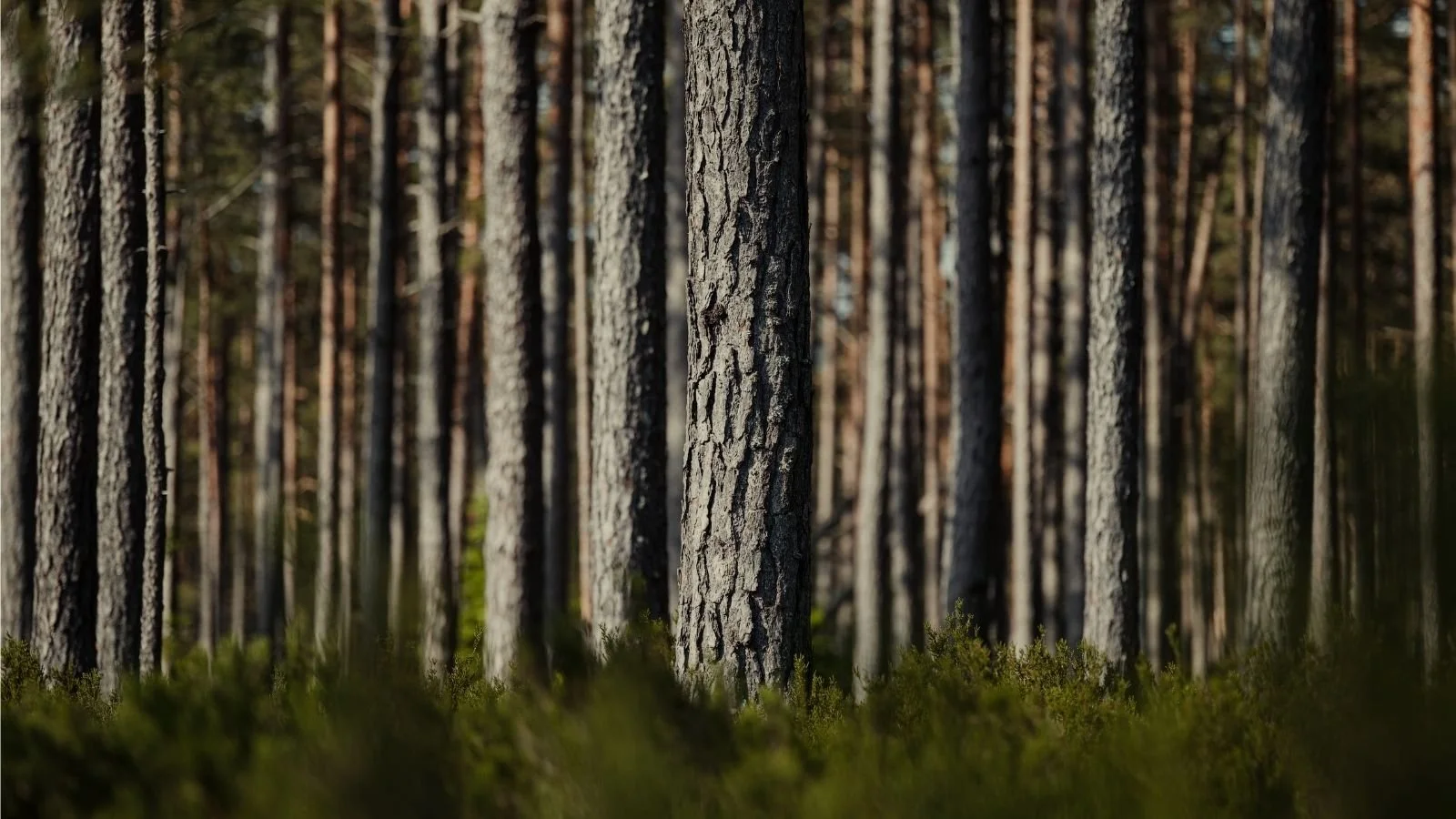
Better Tree Performance Starts at the Root
Designed for better establishment, stronger early development and greater crop consistency from the root system up.
Every radiata pine crop starts with the same challenge.
Get the tree established. Get the roots working. Give it access to the soil, water and nutrition around it. Then give that tree the best opportunity to develop into a productive part of the crop.
DCT Forestry is a proprietary liquid treatment developed specifically for forestry to support the soil–root–nutrient environment that radiata pine depends on during establishment and development.
Developed for forestry. Not adapted to it.
What Is DCT Forestry?
DCT Forestry is a concentrated, multi-functional liquid formulation developed specifically around the requirements of tree production and forestry.
It is primarily a soil and root-environment treatment, rather than a conventional high-analysis fertiliser or a treatment that simply needs to be applied directly to individual trees.
The formulation is designed around three connected functions.
ROOT
Support development and function of the root system and the tree's ability to explore the surrounding soil.
NUTRITION
Support the processes involved in nutrient availability, access, uptake and utilisation.
PLANT
Support normal plant function as the tree establishes and develops through changing growing conditions.
One forestry formulation. Three connected areas of support.
Why Start Below Ground?
A tree can only access the soil its roots can effectively explore.
During establishment, a relatively small root system has to move beyond the planting zone and begin accessing a much larger and more variable soil environment.
Soil physical conditions, moisture, nutrient availability, root development and plant demand all interact.
If that environment restricts the developing root system, it can restrict what the tree above ground is able to do.
That is why DCT Forestry doesn't start by asking:
“What can we add to the tree?”
It starts with a broader question:
“How can we improve the environment the tree depends on?”
Better Conditions Below Ground Can Drive Better Performance Above It
The relationship between the rooting environment and radiata pine performance is well established.
Published New Zealand radiata pine research has demonstrated that where soil conditions restrict root development, available rooting volume or nutrient function, tree performance can suffer.
Importantly, when a limiting condition is improved, the response can be measured in the trees themselves.
Published research has reported examples including:
~10% improvement in establishment survival where restrictive soil conditions were improved.
Approximately 10% additional growth after four years in a study where site preparation or N + P treatment improved growing conditions.
Improved crop uniformity following improvement of restrictive rooting conditions.
Research has also demonstrated that radiata pine root extension can become severely restricted where soil penetration resistance becomes excessive.
The forestry principle is important:
Where the soil or root environment is constraining radiata pine performance, improving that limiting condition can improve the tree growing above it.
These are independent radiata pine research findings rather than DCT Forestry performance figures.
They demonstrate why the soil–root environment is commercially important to forestry and why DCT Forestry has been designed to work there.
DCT's wider field programmes have also produced measurable changes in root development and soil-related performance under commercial conditions.
DCT Forestry takes that wider experience into a formulation developed specifically for radiata pine and the forestry environment.
The objective is to convert better function below ground into:
Better establishment.
Stronger early development.
Greater crop consistency.
Developed for Forestry. Not Adapted to It.
DCT Forestry isn't an agricultural product that has simply been given a forestry recommendation.
DCT has worked with pine tree production and a specialist commercial pine nursery in Nelson for approximately 15–20 years.
That experience has helped shape how we think about root development, nutrition, plant function, formulation, application and the environment in which forestry trees establish and develop.
Forestry was part of the product's design from the beginning.
The result is a stable liquid formulation designed to be practical at commercial forestry scale.
How Is DCT Forestry Applied?
Typical field soil application rate
15 litres per hectare
DCT Forestry is diluted with water as the carrier and applied into the soil/root environment.
Because tree roots expand into the surrounding soil rather than remaining immediately beneath the stem, application does not have to be limited to treating individual trees.
Depending on the forestry operation, site and equipment, application can include:
Broad Soil Application
Application across the relevant soil environment where this suits the site and establishment programme.
Targeted or Banded Application
Concentrating application around the developing rooting environment where this better suits the operation, vegetation-management programme or equipment.
Root Treatment at Planting
Seedling root treatment at planting can also be considered as a separate application method.
The 15 L/ha field rate is a soil application rate and should not be interpreted as a root-dip dilution.
The application method can be matched to the forestry operation.
Designed Around Forestry Operations
A forestry treatment only makes commercial sense if it can be practically implemented.
DCT isn't asking forestry to redesign its establishment operation around our product.
DCT Forestry is designed to fit around the establishment system already being used.
Where practical, applications should be aligned with operations already taking place on the site rather than creating unnecessary additional passes.
Planting and establishment operations provide obvious application opportunities.
Existing weed-control operations may also provide a practical application window, potentially avoiding a completely separate mobilisation.
DCT Forestry may be applied as a separate treatment during that operational window.
Where combined application with another spray treatment is being considered, compatibility must first be confirmed for the specific herbicide, rate and spray programme.
A common operational window should not automatically be interpreted as blanket tank-mix compatibility.
DCT can work with the forestry team or contractor to identify the most practical application approach.
DCT supplies the product and application guidance. Existing forestry teams and contractors can carry out the application using suitable conventional equipment.
No specialised DCT application equipment is required.
The Recommended Programme
DCT Forestry is not designed around frequent calendar-based spraying.
DCT's recommended full programme is three strategically timed applications at 15 L/ha per application.
Application timing is matched to planting, establishment activity, site conditions and existing forestry operations wherever practical rather than forcing forestry into an artificial application calendar.
The aim is to provide support through the important establishment period while avoiding unnecessary operations.
The programme is designed around forestry operations — not the other way around.
What If the Full Programme Doesn't Fit the Budget or Operation?
Not every forestry programme has the same operational opportunities or budget.
Where the full three-application DCT Forestry programme is impractical, the programme can be adjusted.
Options can include:
One DCT Forestry application at the key establishment stage.
Two strategically timed DCT Forestry applications.
Or:
DCT Forestry at the key establishment stage followed by a lower-cost supporting DCT treatment.
This gives forestry managers flexibility without simply reducing the soil application rate to reach a lower price point.
The normal field soil application rate remains 15 L/ha per application.
The aim is not to maximise litres applied.
The aim is to produce a commercially worthwhile tree response at a programme cost that makes sense.
What Does DCT Forestry Cost?
At the standard price of $15 per litre, the normal 15 L/ha field application represents:
$225 per hectare per application
Commercial volume pricing can reduce the DCT Forestry product cost toward:
$165 per hectare per application
depending on programme volume.
DCT's recommended three-application programme therefore represents approximately:
$495–$675 per hectare in DCT Forestry product across the programme
before application costs.
The full programme is not the only commercial option.
Where budget or operational constraints require it, DCT can structure a reduced programme using fewer DCT Forestry applications or a lower-cost supporting DCT treatment.
This allows the commercial decision to be made at the level that matters:
Does the improvement in establishment and tree performance create more value than the programme costs to deliver?
At forestry scale, relatively small repeatable improvements in survival, development or crop consistency can become commercially significant when multiplied across thousands of trees and hundreds of hectares.
What Are We Looking to Improve?
DCT Forestry is designed around three primary commercial outcomes.
Better Establishment
Support the developing tree and root system through the transition into the forest environment.
Stronger Early Development
Support the root, nutrient and plant functions that underpin early tree development.
Greater Crop Consistency
Support more consistent development across the treated tree population.
These outcomes do not need to be judged by looking for one exceptional tree.
They can be measured across the crop.
Works Alongside Good Forestry Management
DCT Forestry is not intended to replace the things that already matter.
It is designed to work alongside them.
That includes:
Quality planting stock
Good planting technique
Appropriate site preparation
Vegetation management
Soil and foliar testing
Site-specific fertiliser where required
Good silvicultural management
DCT Forestry provides another tool for supporting the soil–root–plant system within that wider programme.
It is not intended as a substitute for corrective fertiliser where testing identifies a specific nutrient deficiency.
Forestry Is a Long-Term Investment
The value of establishment isn't confined to the first season.
The tree established today occupies that hectare for decades.
Survival affects how much of the planted crop remains.
Early development affects how quickly the crop establishes.
Uniformity affects the quality and consistency of the stand forestry managers have to work with.
And the root system developed beneath the tree remains fundamental to its ability to explore soil, access water and acquire nutrition as the tree grows.
That is why DCT Forestry focuses on the system beneath the tree as well as the tree above it.
Better establishment.
Stronger development.
Greater crop consistency.
Developed for forestry. Not adapted to it.

Continue Exploring the other foundations:
-
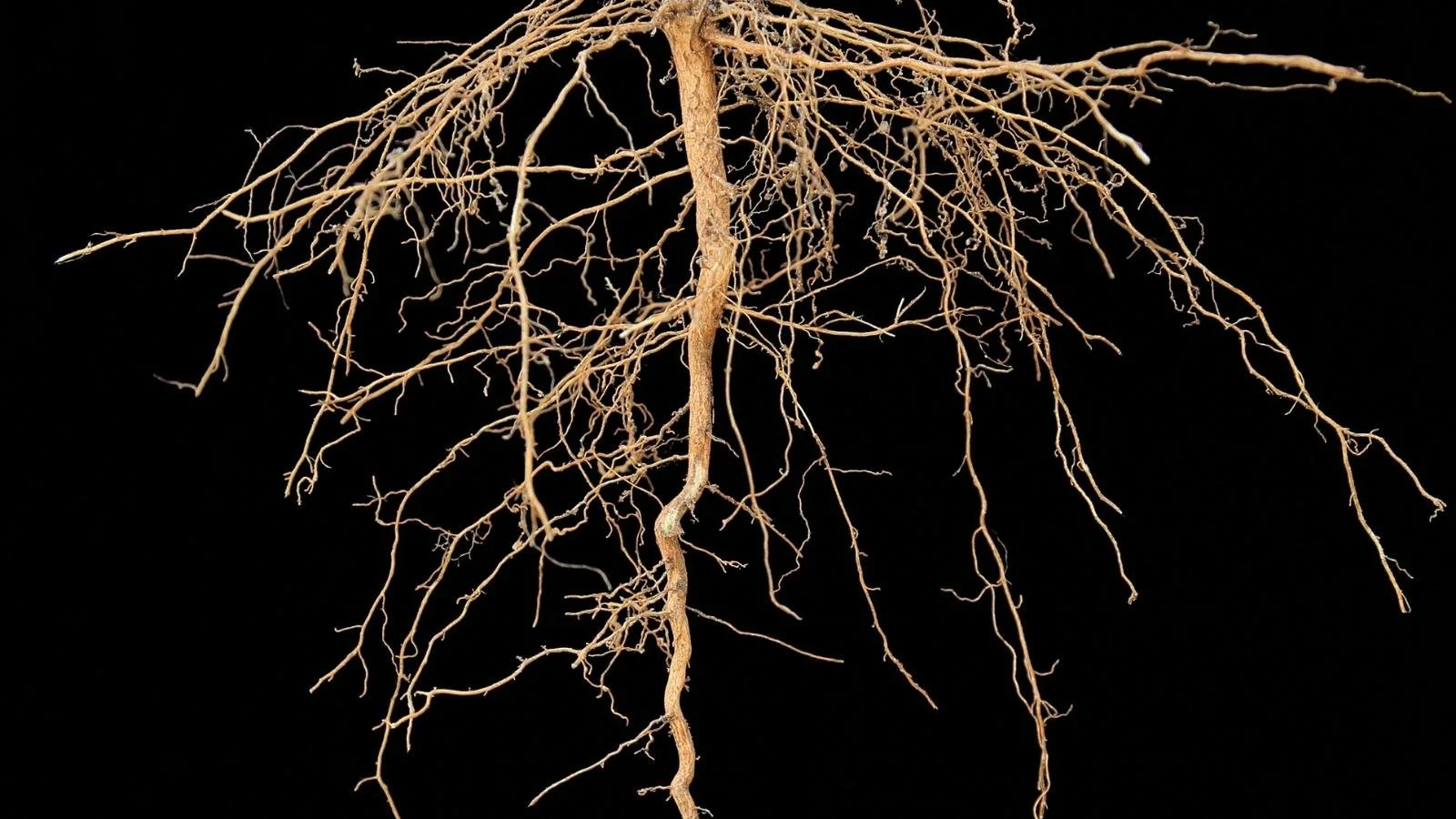
Root Development
Understanding how plants explore the soil for water and nutrients.
-
Soil Function
Understanding the environment where roots, water, nutrients and living processes interact.
-
Nutrient Efficiency
Understanding how farming systems capture and use available nutrients.
-
Plant Performance
Understanding how plants convert available resources into productive growth.