
Does DCT Actually Work?
Yes. And we can show you why we believe that.
For more than 20 years, DCT products have been used in New Zealand farming and growing systems.
During that time, we've measured changes in roots, clover, soil characteristics, nutrient behaviour, pasture and crop performance. DCT products have been investigated outside DCT, and the processes our products are designed to influence sit within a substantial body of New Zealand and international agricultural science.
That doesn't mean every DCT product will produce the same type or magnitude of response in every growing system.
It means something much simpler.
There is evidence.
And rather than asking you to take our word for it, we'd like to show it to you.
Start With What We've Actually Seen
These aren't theoretical numbers.
They're examples of measurements made while DCT products were being used in real New Zealand growing systems.
62 → 105 mm
Average Measured Root Depth
Across ten paddocks in one field assessment, average measured root depth increased from 62 mm to 105 mm over one year.
10% → 17%
Average Measured Clover
Across ten paddocks in another DCT field assessment, average clover increased from 10% to 17% over one year.
12% MORE NITROGEN RETAINED
Cawthron Institute Investigation
In a 2012 Cawthron Institute investigation comparing DCT's Restore4 treatment with granular urea under an extreme simulated leaching regime, the DCT treatment retained 12% more nitrogen in the soil under the conditions tested.
AND THERE'S MORE
DCT's case-study library contains observations across pasture, livestock, cropping and horticultural systems, including changes measured in soil characteristics, roots, plant performance and farm production.
These results occurred in particular growing systems under particular conditions.
They show what happened there not the type or magnitude of response another farm, orchard, vineyard or crop should expect.
But they answer an important first question:
Have measurable changes been observed where DCT products have been used?
Yes.
Now the more interesting question is why?
We Didn't Arrive Yesterday
Results matter.
But so does knowing who is standing behind them.
MORE THAN 20 YEARS
DCT has been developing and manufacturing agricultural products in New Zealand since 2004.
NEW ZEALAND EXPERIENCE
Our products have been used across different regions, agricultural sectors and growing systems.
INVESTIGATION OUTSIDE DCT
DCT products have been examined outside our company, alongside our own development work and commercial field observations.
DECADES OF DEVELOPMENT
Our work has evolved from an early emphasis on soil biology and compost tea through to today's broader focus on soil, root, nutrient and plant performance.
Being around for more than 20 years doesn't prove a product works.
But it does tell you something important.
DCT didn't arrive yesterday because soil health or biostimulants suddenly became fashionable.
We've been asking these questions since 2004.
But Are the Results Scientifically Plausible?
A field result can tell us what happened.
It doesn't necessarily tell us why it happened.
If roots became deeper, why?
If clover increased, what changed?
If more nitrogen remained in soil under an experimental treatment, what processes could explain it?
Those are scientific questions.
And before we use our own results to answer them, there's a tougher test we can apply.
Take DCT Out of the Argument
Forget our products for a moment.
Forget our case studies.
Forget what we say.
Ask instead:
Does independent agricultural science support the processes DCT says matter?
This Isn't Fringe Science
Agricultural science recognises different ways products can interact with a growing system.
Some of DCT's work sits within modern plant-biostimulant science.
Some relates to soil conditioning.
Some relates to nutrients and fertiliser performance.
But there's a problem with trying to understand a growing system entirely through product categories.
The Farm Doesn't Operate in Categories
A plant doesn't experience soil physics on Monday, chemistry on Tuesday and biology on Wednesday.
They're happening together.
PHYSICS
Structure. Compaction. Pore space. Water. Air. Root penetration.
CHEMISTRY
Nutrient forms. Availability. Exchange. pH. Reactions within the soil.
BIOLOGY
Roots. Microorganisms. Organic matter decomposition. Nutrient cycling. Rhizosphere interactions.
BIOCHEMISTRY
Uptake. Enzymes. Assimilation. Signalling. Metabolism. Plant response.
They interact continuously.
And that interconnected system is where DCT has spent more than 20 years working.
Four Parts of One Growing System
We often explain our approach through four areas.
ROOT DEVELOPMENT
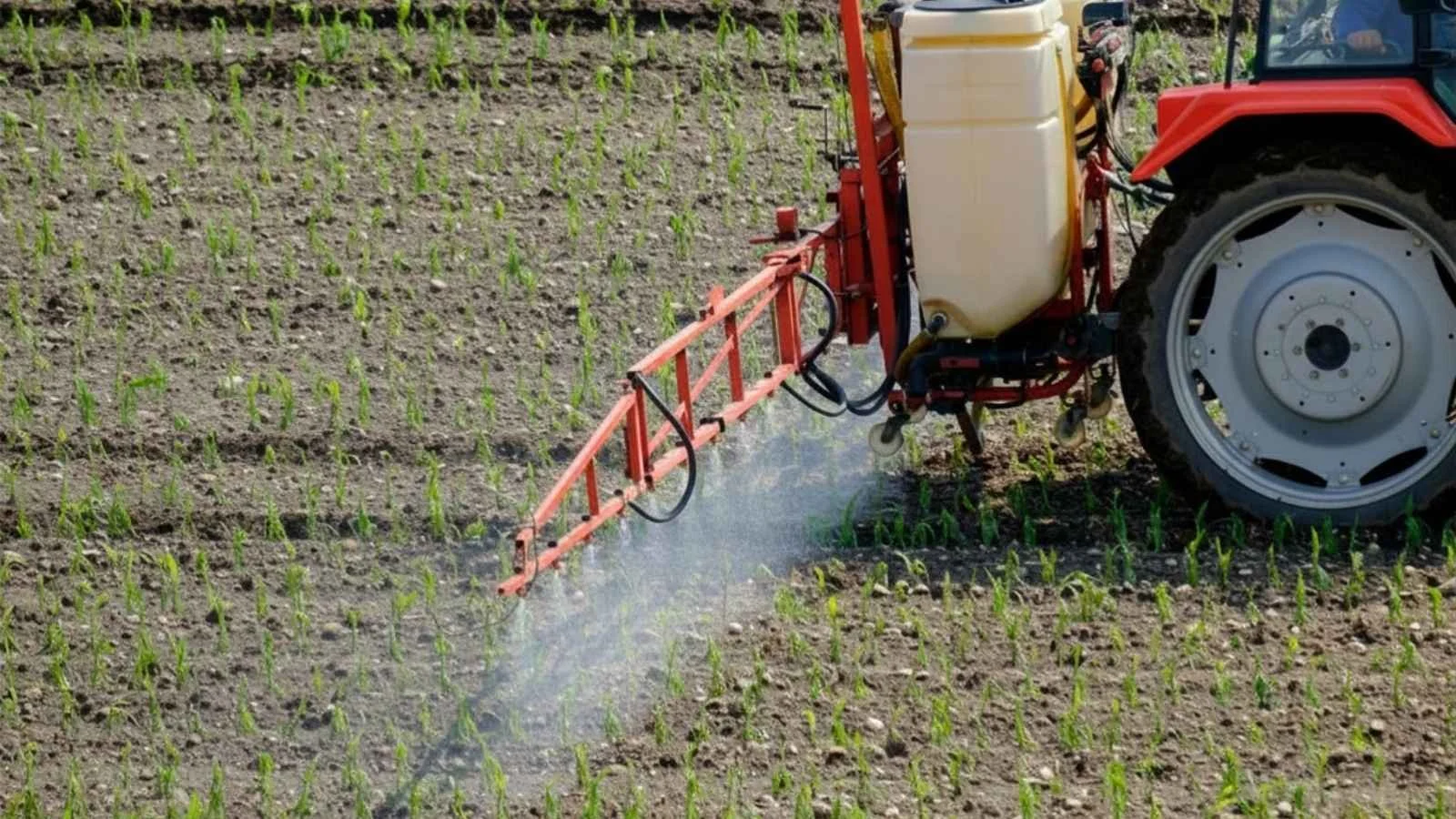
Roots determine how plants explore soil for water and nutrients.
Their depth, distribution and interaction with the surrounding soil can influence what resources a plant is able to access.
SOIL FUNCTION
Roots have to grow through real soil.
Structure, pore space, water, aeration, chemistry, organic matter and biology all contribute to the environment surrounding the root.
NUTRIENT EFFICIENCY
Applying a nutrient and using a nutrient aren't the same thing.
Between application and plant growth are transformations in soil, movement toward roots, uptake, transport and utilisation within the plant.
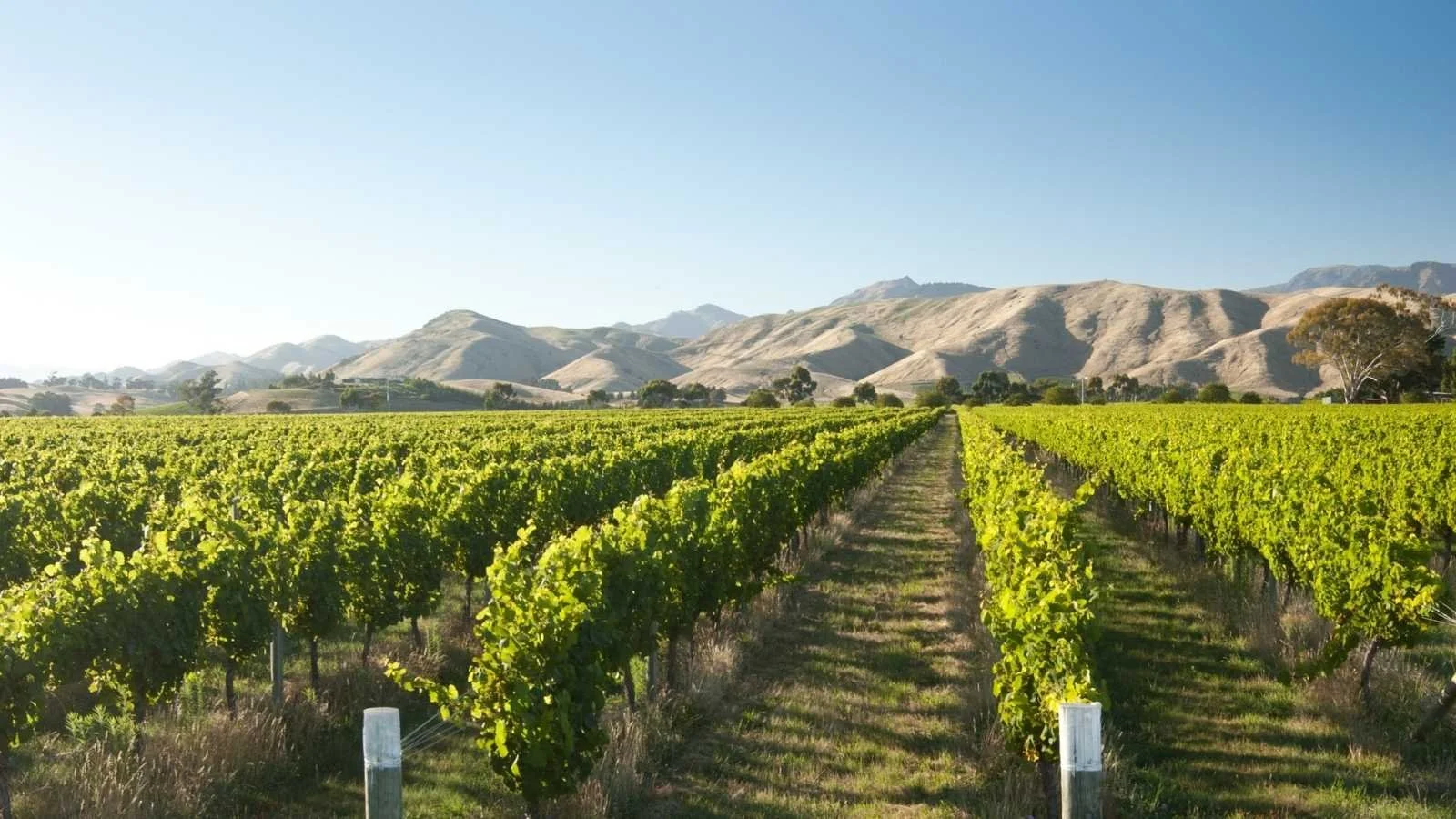
PLANT PERFORMANCE
Eventually all of this has to matter above ground.
Plants have to turn available water, nutrients, light and their growing environment into growth, recovery, reproduction, crop development and production.
These aren't four independent systems.
They interact.
Soil influences roots.
Roots influence the soil around them.
Water influences nutrient movement.
Nutrients influence root and plant development.
Plants influence biology.
Biology influences nutrient cycling.
That's not DCT science.
That's agriculture.
And This Field Has Been Studied — A Lot
We're not talking about a handful of favourable papers.
One major peer-reviewed meta-analysis of non-microbial plant biostimulants analysed more than 1,000 paired open-field observations across approximately 180 studies worldwide.
Across the dataset, the average yield response was 17.9%.
But here's the more interesting part.
Responses varied with biostimulant category, crop, climate, soil conditions and application method.
The scientific literature doesn't say:
“Every biostimulant works.”
It tells us something much more useful:
Measurable effects occur, and the product, growing system and conditions matter.
So far, however, we've proven nothing about DCT.
We've established only that the processes we're interested in sit comfortably within established agricultural science.
That's scientific plausibility.
The next question is harder.
But A Lot of That Research Wasn't Done in New Zealand
Correct.
New Zealand soils aren't identical to soils in Europe, North America, Asia or Australia.
Our climate can be different.
Our crops and pasture systems can be different.
Our management can be different.
So can overseas research really tell a New Zealand farmer or grower anything useful?
Yes — if we ask it the right question.
Mechanisms Travel Better Than Numbers
A root growing in New Zealand doesn't operate according to different laws of plant physiology because it happens to be here.
Water still moves through soil.
Plants still require essential nutrients.
Roots still respond to their environment.
Microorganisms still participate in nutrient transformations.
Plants still have to acquire, transport and use nutrients.
These are fundamental processes.
International research can therefore help establish how a process works, whether a response is scientifically plausible and which factors may influence it.
But suppose an overseas experiment reports a 12% yield increase.
Can we assume a New Zealand grower will also get 12%?
No.
Different soil.
Different climate.
Different plant.
Different management.
Different starting conditions.
Potentially a different formulation.
The mechanism may be highly relevant while the type and magnitude of the commercial response may not transfer at all.
So we use different evidence for different jobs.
INTERNATIONAL SCIENCE
What mechanisms exist?
What responses are possible?
What variables influence them?
NEW ZEALAND SCIENCE
How do those processes behave under our soils, climate, plants and farming systems?
DCT-SPECIFIC EVIDENCE
Does the finished DCT product actually influence the process we're talking about?
That's a much stronger evidence chain than simply pointing to an overseas paper and saying:
“See? Proven.”
What Happens When Good Research Disagrees?
It does.
And this is where agricultural science becomes much more interesting than collecting papers that all appear to agree with us.
New Zealand research has reported positive pasture responses when humic materials have been used alongside nitrogen fertiliser.
But separate controlled New Zealand research examining humic and fulvic additions alongside liquid urea found no statistically significant additional shoot dry-weight response under the treatments and conditions tested.
So which result should we believe?
Both.
They weren't the same experiment.
A Result Answers the Question That Was Tested
Different experiments can vary in:
Product or material
Formulation
Rate
Application method
Soil
Plant
Temperature
Moisture
Duration
Nutrient programme
Starting conditions
And what was actually measured
If one experiment finds a response and another doesn't, the first question shouldn't automatically be:
“Which one is wrong?”
A better question is:
“What was different?”
A result showing no statistically significant response matters.
It may identify where an effect disappears.
It may challenge a proposed mechanism.
It may reveal the importance of rate, formulation or conditions.
And sometimes it may tell us an idea simply doesn't work.
We need that evidence too.
That's why our question isn't:
“Can we find a scientific paper that agrees with DCT?”
With enough literature, that's far too easy.
Our question should be:
“What does the weight of the evidence actually tell us?”
And DCT doesn't get a different set of rules.
Fine. But Does Any of This Prove DCT Works?
No.
Not yet.
The existence of good soil science doesn't prove a DCT product works.
A thousand biostimulant observations don't prove a DCT product works.
And an international study describing a mechanism doesn't prove DCT produces that mechanism.
So now we have to put DCT back under the microscope.
Follow the Evidence
A good result isn't automatically proof of what caused it.
So rather than jumping from:
DCT was applied → something improved → therefore DCT caused everything
we can do something more useful.
Follow what happened through the growing system.
Start Underground
Across ten paddocks in one New Zealand field assessment, average measured root depth increased from:
62 mm → 105 mm
over one year.
That's a substantial observed change.
But the measurement alone doesn't tell us exactly why it happened.
So ask the next question.
Could the soil environment influence root development?
Yes.
Root growth responds to physical, chemical and biological conditions around it.
So a change in root development following changes within the growing environment is scientifically plausible.
But there's still a missing piece:
Did DCT influence that environment?
Look at the Soil
DCT's field records contain measurements at more than one point in the system.
Changes have been recorded in soil characteristics as well as root development, including soil structure, organic matter and sodium under particular field conditions.
Again, commercial field observations can't isolate DCT from every other variable.
Weather happened.
Management continued.
Plants grew.
Soils varied.
But now we're no longer looking only at:
“The grass looked better.”
We're finding measurements at different points within an interconnected system.
Now Follow the Nutrients
Here we have something different from a commercial farm observation.
In 2012, Cawthron Institute investigated DCT's Restore4 treatment against granular urea and a control in a Nelson soil under an extreme simulated leaching regime.
The treatments were subjected to the equivalent of approximately one metre of rainfall over five days.
Under those particular experimental conditions, the Restore4 treatment retained 12% more nitrogen in the soil than the granular urea treatment, according to DCT's summary of Cawthron Report No. 2087.
That does not tell us DCT will retain 12% more nitrogen on every farm.
It doesn't establish what every current DCT product will do.
It tells us something narrower:
Under the conditions tested, a DCT treatment produced a measurable difference in the amount of nitrogen remaining in the soil compared with granular urea.
That's DCT-specific experimental evidence.
Another piece in the chain.
Then Look Above Ground
Across ten paddocks in another DCT field assessment, measured clover increased from an average of:
10% → 17%
over one year.
DCT's wider field records also contain observations from pasture, cropping and horticultural systems.
Again, these outcomes belong to those particular growing systems.
But something interesting is emerging.
Look at the Pattern
SOIL
Measured changes have been recorded in soil characteristics.
↓
ROOTS
Measured changes have been recorded in root development.
↓
NUTRIENTS
DCT-specific investigation outside the company has measured a difference in nitrogen retention under the conditions tested.
↓
PLANTS
Measured changes have been recorded in clover, pasture and crop performance.
Now compare that with what established science told us earlier:
these parts of a growing system interact.
That doesn't prove a single universal chain:
DCT → soil → roots → nutrients → production
But it does give us something meaningful:
Observations at multiple points along a scientifically plausible pathway.
And DCT-specific experimental evidence at particular points within that pathway.
So Is That Proof?
It depends what you're asking us to prove.
Have measurable changes occurred in growing systems using DCT?
Yes.
Are the soil, root, nutrient and plant processes we talk about supported by established science?
Yes.
Has DCT-specific investigation occurred outside DCT?
Yes.
Are many of the observations consistent with scientifically plausible pathways?
Yes.
Have we proven that every observed improvement was caused solely by DCT?
No.
Some evidence comes from commercial farms rather than replicated controlled trials.
Real growing systems contain variables that can't be completely controlled.
Some mechanisms have stronger DCT-specific evidence than others.
And there are questions we still want properly investigated.
That's where the evidence currently stops.
But That's Very Different From “There's No Evidence”
This distinction matters.
“DCT hasn't proven every mechanism and every commercial outcome through replicated New Zealand trials.”
and:
“There is no evidence behind DCT.”
are not the same statement.
The first identifies legitimate gaps.
The second ignores evidence that already exists.
Our position sits between the extremes.
We aren't asking anyone to believe DCT has answered every scientific question.
We haven't.
We're asking you to look at what's actually there.
More than 20 years of commercial experience.
Measured field observations.
Investigation outside DCT.
New Zealand research.
A substantial international science base.
Mechanisms consistent with established soil and plant science.
And unanswered questions we're comfortable acknowledging.
Could Something Else Have Caused the Field Results?
Of course.
That's one of the limitations of commercial field evidence.
Rainfall changes.
Management changes.
Fertiliser programmes change.
Plants mature.
Seasons differ.
Soils vary.
That's precisely why a commercial observation shouldn't automatically be described as a controlled experiment.
But commercial farms, orchards, vineyards and crops are also where agricultural products ultimately have to perform.
Controlled experiments help isolate cause and effect.
Laboratory work helps investigate mechanisms.
Field trials test treatments under defined conditions.
Commercial observations show what happened in farming and growing reality.
We need all of them.
No single form of evidence has to do every job.
What Would Make the DCT Evidence Stronger?
This may be an unusual question for a company to put on its own website.
We think it's worth answering.
More replicated New Zealand trials.
More controls.
More independent measurements across different soils and growing systems.
Longer-term monitoring.
More product-specific investigation of mechanisms.
Independent replication of existing findings.
If future research supports what we've observed, confidence increases.
If good evidence shows one of our ideas is wrong:
we change the idea.
That's what science is for.
Why Are We Confident?
Not because of one extraordinary result.
Not because of one investigation.
Not because we found a scientific paper containing words that appear on our website.
And not simply because we've been doing this for more than 20 years.
We're confident because different kinds of evidence point in a similar direction.
Independent science establishes the processes.
New Zealand science establishes their relevance here.
DCT-specific investigation provides evidence at particular points.
Commercial measurements show what has occurred under real growing conditions.
Experience helps us recognise patterns — and where outcomes vary.
None is the whole answer.
Together, they make a case worth taking seriously.
Does It Work Every Time?
Let's try a slightly unfair question.
Does urea work?
Most farmers would probably say:
Of course.
And they'd be right.
Now change the question.
Does every kilogram of urea produce exactly the same amount of additional plant growth every time it's applied?
Of course not.
Same product.
Different soil.
Different moisture.
Different temperature.
Different plant demand.
Different timing.
Different result.
And nobody concludes:
“Apparently nitrogen doesn't work.”
Instead, decades of research have helped agriculture understand when, where and how nitrogen can be used more effectively.
That's what mature agricultural science looks like.
Variability Isn't an Excuse
It would be very convenient for DCT to say:
“Didn't get a response? Growing systems are variable.”
That's not good enough.
Variability should make us ask better questions.
What were we trying to improve?
What were the starting conditions?
Was the application appropriate?
What else was influencing performance?
What did we actually measure?
And did the product simply fail to produce a meaningful response in that measurement?
That last possibility has to remain on the table.
Otherwise we're not testing an idea.
We're defending one.
Does a Growing System Have to Be Struggling to Benefit?
Not necessarily.
A high-performing growing system is still a living system.
Roots are still exploring soil.
Nutrients are still being transformed and acquired.
Water and air are still moving.
Microorganisms are still interacting with roots and organic matter.
Plants are still responding to their environment.
There is no point at which these processes switch off because a farm, orchard, vineyard or crop is performing well.
So improvement doesn't always require something to be badly wrong.
Sometimes the opportunity may be removing a constraint.
Sometimes it may be making an already functioning system perform more efficiently, consistently or resiliently.
What we cannot assume is how large that opportunity will be.
The processes are universal. The response to intervention isn't necessarily universal.
So instead of simply asking:
“Does this farm need DCT?”
we think a better question is:
“Is there an opportunity for DCT to improve the performance, efficiency or resilience of this growing system?”
From Proof to Predictability
Ultimately, this is where we want the science to go.
CAN IT WORK?
Can measurable responses occur?
We have evidence that they can.
↓
WHY MIGHT IT WORK?
Are there established mechanisms that could explain the observations?
In many areas, yes.
↓
DOES DCT INFLUENCE THOSE PROCESSES?
That requires DCT-specific evidence.
We have evidence in some areas, with gaps remaining.
↓
WHERE, WHEN AND HOW IS DCT MOST LIKELY TO CREATE VALUE?
Which soils?
Which crops?
Which pasture systems?
Which starting conditions?
Which opportunities?
Which management strategies?
And what should we measure to know whether it worked?
The goal isn't just more proof. It's better prediction.
More Than 20 Years Doesn't Mean We've Finished
DCT began in 2004.
Our early work focused heavily on soil biology and compost tea.
Over time we worked with soil conditions, plant responses, nutrient programmes, different formulations and different growing systems.
And our thinking broadened.
Biology matters.
But biology isn't everything.
Chemistry matters.
Physics matters.
Biochemistry matters.
Roots matter.
Water matters.
Nutrients matter.
Management matters.
We increasingly came back to one question:
How can we help the soil, plant and nutrient system perform better together?
That's the question behind DCT today.
And we're still learning.
There are mechanisms we'd like investigated more deeply.
Field observations we'd like independently replicated.
Products we're continuing to develop.
Hypotheses we're still testing.
And there will almost certainly be things we believe today that future evidence causes us to refine.
Good.
That's what we want science to do.
Still Not Convinced?
Good. Let's Ask the Awkward Questions.
“Isn't This Just Another Biostimulant?”
🚩 THE ANSWER THAT WOULD BE CONVENIENT
“No. DCT is completely different from everything else.”
Sounds impressive.
Doesn't tell you much.
THE DCT ANSWER:
Some of what DCT does sits within recognised plant-biostimulant science.
We're comfortable with that.
Other parts of our work relate to soil conditioning, nutrients and fertiliser performance.
The problem isn't the word biostimulant.
It's assuming the category tells you whether an individual product is effective, well formulated, appropriate for your situation or supported by good evidence.
The category is the beginning of the question, not the answer.
“If This Really Works, Why Isn't Everyone Using It?”
🚩 THE ANSWER THAT WOULD BE CONVENIENT
“Because conventional agriculture doesn't want you to know.”
No.
We don't believe there's a giant agricultural conspiracy keeping DCT out of your shed.
THE DCT ANSWER:
Farmers and growers are asked to try new products constantly.
Some work.
Some don't.
Some are poorly explained.
Some are oversold.
Changing an established programme also carries cost and risk.
DCT has to accept some responsibility too.
We haven't always communicated our science as clearly as we could. We haven't completed every independent trial we'd like. And we're a relatively small New Zealand company.
That explains why awareness and adoption aren't universal.
It doesn't tell you whether the products work.
“Are Your Case Studies Actually Proof?”
🚩 THE ANSWER THAT WOULD BE CONVENIENT
“Absolutely. Just look at those numbers.”
Not by themselves.
THE DCT ANSWER:
They tell you what was measured or observed under particular commercial conditions.
That's useful evidence.
But most aren't replicated controlled experiments.
That's why:
62 mm → 105 mm on one farm
doesn't become:
“DCT will increase your roots by 51%.”
One is an observation.
The other would be a promise our evidence doesn't justify.
“Aren't You Just Using Overseas Research to Make DCT Look Scientific?”
🚩 THE ANSWER THAT WOULD BE CONVENIENT
“Plants work the same everywhere, so overseas results apply directly here.”
Too easy.
THE DCT ANSWER:
International research is extremely valuable for understanding mechanisms and the wider evidence base.
But an overseas commercial result doesn't automatically become a New Zealand commercial result.
Mechanisms can travel better than numbers.
That's why we distinguish international science, New Zealand evidence and DCT-specific evidence.
“Couldn't Those Field Results Have Happened Without DCT?”
🚩 THE ANSWER THAT WOULD BE CONVENIENT
“No. DCT definitely caused them.”
We can't establish that from an uncontrolled commercial observation.
THE DCT ANSWER:
Other factors could have contributed.
That's why we've separated field observations from controlled evidence throughout this page.
The sensible response isn't:
“DCT definitely caused everything.”
or:
“Therefore the observations mean nothing.”
It's:
“Interesting. What evidence would allow us to test causation properly?”
“What About Research That Says These Products Don't Work?”
🚩 THE ANSWER THAT WOULD BE CONVENIENT
“They tested it wrong.”
Automatically dismissing every result we dislike isn't science.
THE DCT ANSWER:
Read the study.
What was tested?
At what rate?
On what plant?
In what soil?
For how long?
What was measured?
If no statistically significant response was detected in the outcome being tested, say so.
Evidence doesn't stop being evidence because we don't like the result.
And favourable studies deserve exactly the same scrutiny.
“If You've Been Doing This Since 2004, Why Isn't There More Independent DCT Research?”
🚩 THE ANSWER THAT WOULD BE CONVENIENT
“We don't need it. Our customers know it works.”
We don't think that's good enough.
THE DCT ANSWER:
We'd like more.
Historically, much of DCT's work has focused on product development, manufacturing and commercial field use rather than building a large academic research programme.
There are DCT-specific questions that further independent research could answer much better.
We recognise that gap.
And we think those questions are worth answering.
“Are You Cherry-Picking Science?”
🚩 THE ANSWER THAT WOULD BE CONVENIENT
“No. Every paper supports us.”
If someone tells you that, keep asking questions.
THE DCT ANSWER:
The literature doesn't all reach the same conclusion.
Some studies report substantial responses.
Some report modest responses.
Some report no statistically significant response in the outcome measured.
The right question isn't:
“Can DCT find a paper that supports us?”
Of course we can.
It's:
“Does the wider body of evidence support the mechanism and claim being made?”
“If You Can't Guarantee My Result, Why Should I Buy It?”
🚩 THE ANSWER THAT WOULD BE CONVENIENT
“Don't worry. It'll work.”
Agriculture doesn't give us that luxury.
THE DCT ANSWER:
Ask better questions.
What are you trying to improve?
Is there a plausible opportunity?
Is the product appropriate?
Is the potential value worth the cost?
How could we measure whether it helped?
Our job should be to help you make that decision intelligently — not promise an outcome we can't know in advance.
“So Are You Saying DCT Is Scientifically Proven?”
🚩 THE ANSWER THAT WOULD BE CONVENIENT
“Yes. Scientifically proven.”
Two words can hide an enormous amount.
THE DCT ANSWER:
We'd rather tell you what evidence actually exists.
There is established independent science behind many of the processes DCT works with.
There is relevant New Zealand research.
There has been DCT-specific investigation outside DCT.
There are measured commercial field observations.
And there are areas where more controlled, replicated DCT research would considerably strengthen the evidence.
So instead of asking you to accept a label:
We'll show you the evidence.
“Okay Then. What's the Catch?”
🚩 THE ANSWER THAT WOULD BE CONVENIENT
“There isn't one.”
There always is.
THE DCT ANSWER:
Soils and plants are complicated.
DCT isn't magic.
It doesn't replace good agronomy.
It doesn't make water appear in a drought.
It doesn't make poor management irrelevant.
And it doesn't guarantee every response will be large enough to create an economic return.
What we're trying to do is much less mysterious:
Influence parts of the soil–root–nutrient–plant system in ways that can improve performance, efficiency or resilience.
Understanding when, where and how that creates the most value is part of what we're still working on.
One Last Question
Should You Trust DCT?
We don't think that's quite the right question.
Don't trust us simply because we've been here for more than 20 years.
Don't trust us because we can show you impressive field results.
Don't trust us because we can cite scientific papers.
And don't distrust us simply because someone puts us in a category called biostimulants.
Instead:
Ask Us Better Questions.
Look at what was measured.
Look at who measured it.
Look at what an experiment actually tested.
Look at what we claim — and what we don't.
Look at research that supports the idea.
Look at research that challenges it.
And if there's something we don't know:
Ask Us to Say We Don't Know.
We can live with that.
Because after more than 20 years, DCT isn't interested in winning an argument about whether we're right.
We're interested in getting closer to the right answer.
Make Up Your Own Mind
We started with a simple question:
Does DCT actually work?
Our answer was:
Yes.
After looking more closely, that answer hasn't changed.
But hopefully you now understand why we're comfortable giving it and where the boundaries of that confidence lie.
There's evidence.
There's established science.
There are real New Zealand measurements.
There has been investigation outside DCT.
There are unanswered questions.
And there's more work worth doing.
You don't have to believe every claim about DCT.
We'd much rather you investigated them.
Explore the Evidence
Continue Exploring the foundations:
-

Root Development
Understanding how plants explore the soil for water and nutrients.
-

Soil Function
Understanding the environment where roots, water, nutrients and living processes interact.
-
Nutrient Efficiency
Understanding how farming systems capture and use available nutrients.
-
Plant Performance
Understanding how plants convert available resources into productive growth.