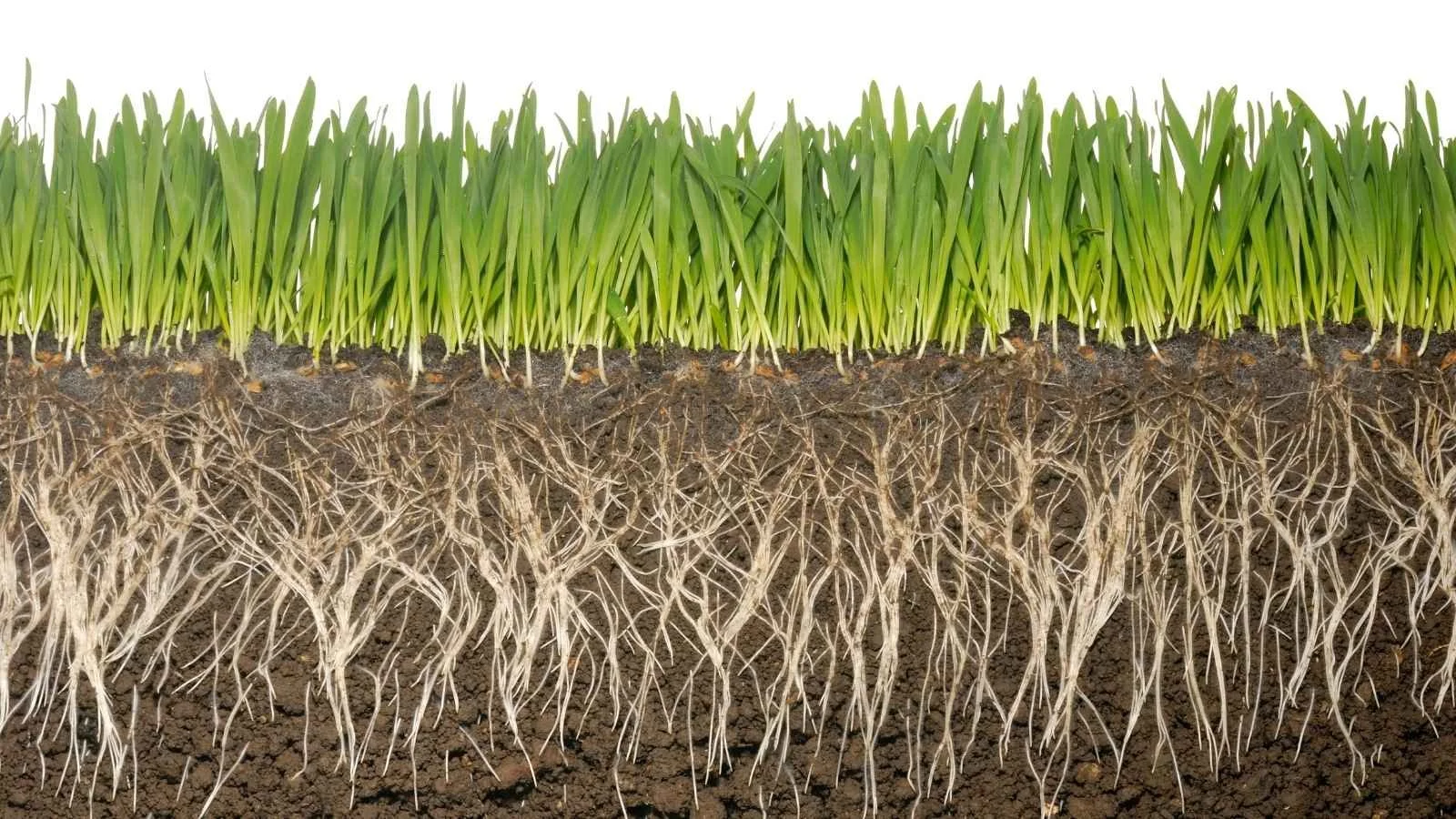
Support Longer, Deeper Roots in Pasture Systems — Science Explained
The findings and principles presented here are based on internationally and locally published research, drawing on peer-reviewed studies and well-established soil science. They reflect scientifically credible evidence and proven principles.
DCT products create soil and plant conditions that support longer, deeper root development, improving pasture resilience, nutrient uptake, and overall pasture productivity.
Introduction
Shallow, lateral root growth is common in pasture systems with compacted soils, leading to reduced water and nutrient uptake, increased thatch formation, and lower productivity.
Root depth and architecture are strongly influenced by:
Soil microbial activity
Nutrient retention and distribution
Soil physical structure and porosity
Plant energy allocation and hormone signaling
DCT products, formulated with humic and fulvic acids and seaweed extracts, stimulate soil biology, improve nutrient retention, and enhance soil structure. These mechanisms create conditions that plausibly support deeper, more extensive root systems in pasture soils.
This paper explains the biological, chemical, physical, and biochemical mechanisms, and presents field observations consistent with these effects.
1. Biology — Soil Microbial Interactions
Healthy soils contain diverse microbial communities that interact with roots. Microbes produce plant growth–promoting compounds and enhance nutrient mineralisation.
How DCT Products Help:
Humic and fulvic acids stimulate microbial activity and diversity
Active microbes produce exopolysaccharides that improve soil aggregation
Aggregated soil reduces mechanical resistance, allowing roots to grow deeper
Result: Roots encounter less physical resistance and can extend further into the soil profile.
2. Chemistry — Nutrient Retention and Availability
Roots grow toward nutrients and moisture. In soils with poor nutrient retention, nutrients can leach or become unavailable, limiting root exploration.
How DCT Products Help:
Humic and fulvic acids bind key nutrients (N, K, Ca, Mg), keeping them available deeper in the soil profile
Gradual nutrient release ensures roots can access resources throughout the soil profile
Seaweed extracts provide plant hormone–like compounds and trace elements, supporting root development
Result: Nutrient availability at depth encourages roots to grow downward, increasing overall rooting depth.
3. Physics — Soil Structure and Root Penetration
Compacted soils restrict pore space, water infiltration, and oxygen availability, forcing roots to grow laterally near the surface.
How DCT Products Help:
Humic and fulvic acids improve soil aggregation, creating connected pores
Enhanced porosity improves water and oxygen movement
Roots can penetrate compacted layers more easily
Result: Deeper, more extensive root systems with access to water and nutrients at lower soil layers.
4. Biochemistry — Plant Energy Allocation and Root Growth
Plants allocate carbohydrates from photosynthesis to root growth when soil conditions support nutrient and water uptake.
How DCT Products Help:
Seaweed extracts contain plant hormone–like compounds (auxins, cytokinins)
Humic and fulvic acids influence root elongation and branching via signaling pathways
Improved soil conditions allow plants to invest energy in root development
Result: Roots grow longer and branch more extensively, exploring a larger soil volume.
Combined DCT Product Impact — Enabling Deeper Root Systems
Root development is influenced by the interaction of biological, chemical, physical, and biochemical processes.
DCT products combine these effects:
Stimulate microbes → better aggregation → reduced mechanical resistance
Improve nutrient retention → encourage roots to explore deeper layers
Provide plant growth signals → stimulate root elongation and branching
Outcome: Soil and plant conditions plausibly support longer, deeper roots.
Field Observations
Across pasture paddocks where DCT products were applied:
Initial assessment: shallow, lateral roots; average depth 62 mm; compacted soils and thatch formation evident
Follow-up (~12 months later): roots grew deeper and more vertical; average depth 105 mm
Increase in average root depth: 43 mm
These observations illustrate how DCT products support soil conditions and plant responses consistent with deeper rooting, without claiming direct causation.
Root Depth Benchmarks for Pasture Systems
Indicative root depths under different soil conditions:
Severely compacted soils 40–70 mm
Moderately compacted soils 70–120 mm
Well-structured pasture soils 120–200 mm
Deep, well-aerated soils 200+ mm
The initial 62 mm baseline aligns with compacted soils; the 105 mm follow-up aligns with moderately structured soils, demonstrating improved root penetration consistent with DCT product use.
Practical Outcomes for Clients
Longer, deeper roots provide multiple benefits:
Drought resilience: access to deeper soil moisture
Nutrient efficiency: improved uptake of nitrogen, potassium, and other nutrients
Pasture persistence: stronger plants under environmental stress
Reduced thatch: more root biomass below the surface supports soil structure
Soil carbon incorporation: deeper roots contribute organic matter at lower soil depths
By supporting these outcomes, DCT products help clients achieve more resilient and productive pasture systems.