Grass Grub Populations Declined — And We’ve Seen the Pattern More Than Once
Pasture Grass Grub Case Study — Nelson Lakes, New Zealand
A pasture at Nelson Lakes with a substantial grass-grub population showed a progressive decline in grub numbers during a DCT programme. Remaining grubs were observed dead with an unusual hardened or “calcified” appearance.
On its own, that would be an interesting field observation.
But it hasn't been an isolated one.
DCT has subsequently observed similar reductions in grass-grub populations on other farms, in different locations and regions.
We don't have controlled trial data that allows us to say DCT caused those population declines.
But when an unusual result appears repeatedly, it raises a question worth investigating:
Why do we keep seeing this where DCT is being used?
The Nelson Lakes Case
The case comes from pasture in:
Nelson Lakes, New Zealand
Initially, large numbers of grass-grub larvae were present in the soil.
During the period in which DCT was being used, grub numbers progressively declined.
As populations fell, another unusual observation was made.
Some of the remaining grubs being found were:
Dead
with what was described in the field as:
A Hardened or “Calcified” Appearance
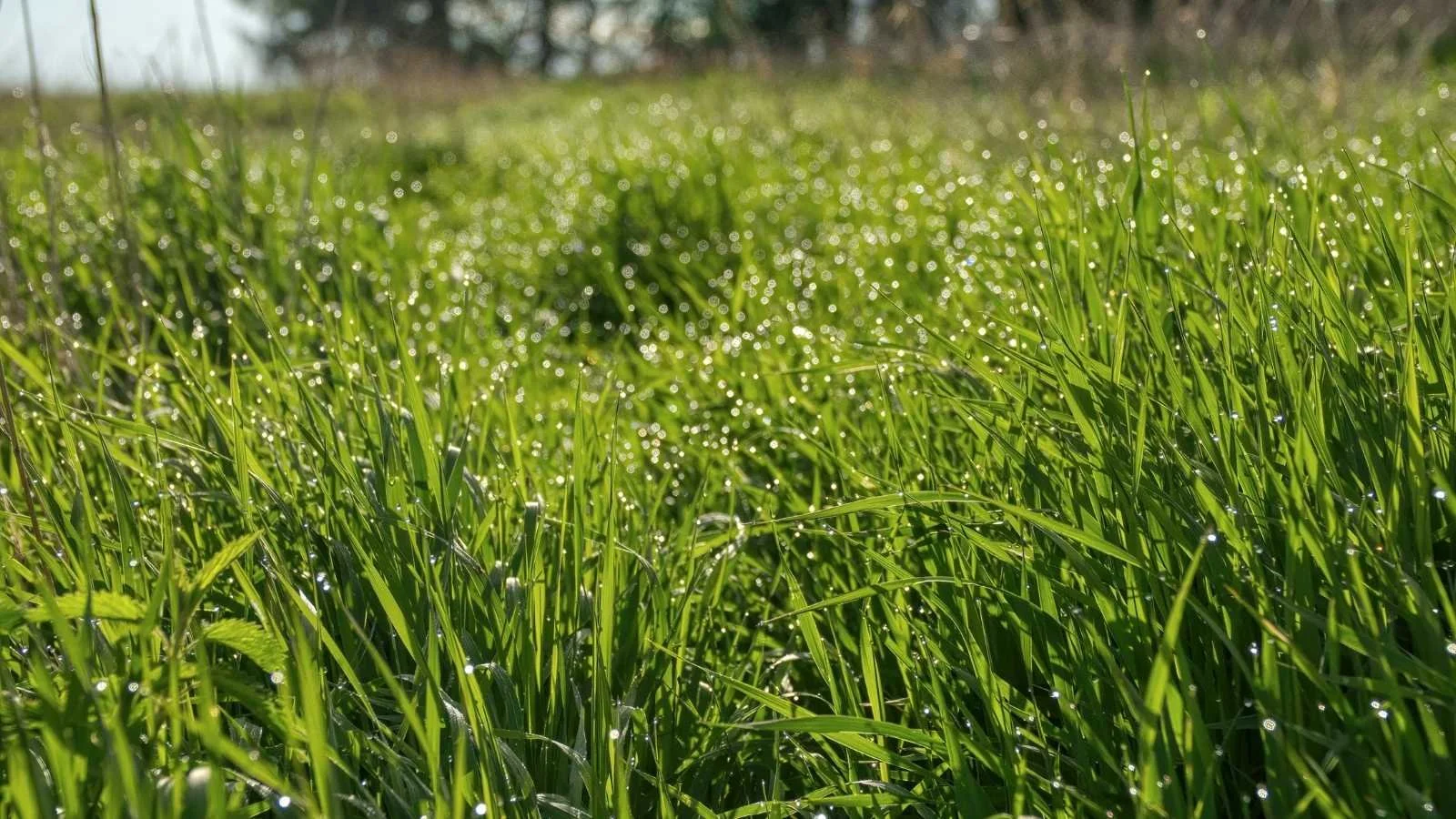
Pasture condition and root health were also reported to improve during the period.
The grubs weren't laboratory analysed, so we don't know what killed them.
And that's where this case becomes particularly interesting.
Grass Grub Has Natural Enemies Below Ground
New Zealand grass grub doesn't exist in isolation.
Soils can contain naturally occurring organisms capable of infecting and killing grass-grub larvae.
One of the best studied in New Zealand is the bacterium Serratia entomophila, which causes amber disease in grass grub.
Other naturally occurring biological enemies include insect-pathogenic fungi and nematodes.
These organisms are part of a much larger biological system operating beneath the pasture.
That gives us several plausible explanations for what was being observed.
But it also raises another question.
Could DCT have influenced the conditions in which those natural biological processes were operating?
Hypothesis One — A Shift in the Soil Microbial Environment
DCT formulations contain compounds capable of influencing biological activity within soil and around plant roots.
Research on humic substances, for example, shows that they can influence microbial metabolism, microbial biomass and bacterial community composition.
Seaweed-derived compounds can also influence root growth, plant stress responses and rhizosphere microbial activity.
That creates a plausible hypothesis.
DCT may have changed the biological environment surrounding the grass grub.
If naturally occurring grass-grub pathogens were already present, changes in the surrounding microbial environment could potentially have influenced the ecological pressure acting on the grub population.
That wasn't measured at Nelson Lakes.
So it remains a hypothesis.
But it is one we can test.
Hypothesis Two — Conditions Became More Favourable to Natural Grass-Grub Pathogens
There is a more specific possibility.
Insect-pathogenic fungi such as Metarhizium and Beauveria are capable of infecting insects through their outer surface, developing within the host and ultimately causing mortality.
The activity and effectiveness of organisms involved in natural pest regulation can be influenced by conditions within the soil.
Research into organic amendments has also shown that changes in organic carbon, microbial habitat and microbial communities can influence entomopathogenic fungi.
That gives us a second hypothesis:
DCT may have shifted soil conditions in a way that favoured naturally occurring organisms capable of attacking grass grub.
This is very different from saying DCT is an insecticide.
The hypothesis isn't that DCT directly poisoned the grubs.
It is that changing their biological environment may have changed the pressures acting upon them.
Hypothesis Three — More Than One Part of the System Changed
There may not be a single organism responsible.
Grass-grub populations exist within a complex system involving:
soil moisture
soil physical conditions
roots
microbial communities
natural pathogens
and:
plant condition
All of these can interact.
The wider scientific evidence suggests that grass-grub populations can be influenced by microbial pathogens, entomopathogenic fungi, nematodes, plant resilience and soil conditions.
So perhaps the most interesting hypothesis is also the broadest:
DCT may have shifted several parts of the soil–plant environment at the same time.
Rather than one simple cause, the population decline may have resulted from changes within the wider ecological system surrounding the grub.
Again, that wasn't measured.
But it gives us another testable explanation for the field pattern.
What About the “Calcified” Grubs?
This is one of the most interesting observations in the case.
We use “calcified” because that's how their appearance was described in the field.
It isn't a laboratory diagnosis.
The affected larvae weren't analysed, so we cannot determine whether their appearance resulted from bacterial disease, fungal infection, nematodes or another cause.
But there is an important distinction.
This wasn't simply:
“We couldn't find as many grubs.”
Dead larvae were actually being found in the soil.
That suggests mortality was occurring within at least part of the population.
What caused that mortality remains unanswered.
One Farm Is an Observation. Repetition Creates a Question.
If this had happened only at Nelson Lakes, a natural fluctuation in the grass-grub population would be an obvious possible explanation.
Grass-grub populations can rise and fall naturally, and disease can contribute to population decline.
But Nelson Lakes hasn't been an isolated observation.
DCT has seen similar reductions in grass-grub populations on multiple farms, in different locations and regions.
We don't have sufficiently controlled historical population counts from those farms to establish causation.
But repetition changes the question.
It is no longer simply:
“What happened at Nelson Lakes?”
It becomes:
“Why do we keep seeing this pattern where DCT is being used?”
That is something worth investigating.
What We Know
At Nelson Lakes:
Grass Grub Population
Declined Progressively
during the DCT programme.
Remaining Grubs
Dead Larvae Were Observed
Appearance
Some Were Described as Hardened or “Calcified”
Pasture
Improved Pasture and Root Condition Was Reported
And beyond Nelson Lakes:
Similar Grass-Grub Reductions Have Been Observed on Other Farms and in Other Regions
That's the field pattern.
What We Don't Yet Know
We don't know which organism, if any, was responsible for the dead grubs.
We don't know whether DCT increased the abundance or activity of naturally occurring grass-grub pathogens.
We don't know whether changes in soil biology, physical conditions, plant resilience or several factors together influenced the result.
And without untreated comparisons and controlled population counts, we can't establish that DCT caused the population decline.
But those aren't reasons to dismiss the observation.
They tell us what needs to be measured next.
What We Don't Yet Know
We don't know which organism, if any, was responsible for the dead grubs.
We don't know whether DCT increased the abundance or activity of naturally occurring grass-grub pathogens.
We don't know whether changes in soil biology, physical conditions, plant resilience or several factors together influenced the result.
And without untreated comparisons and controlled population counts, we can't establish that DCT caused the population decline.
But those aren't reasons to dismiss the observation.
They tell us what needs to be measured next.
Better Farming Starts With Better Understanding
We could look at Nelson Lakes and simply conclude that grass-grub numbers fell while DCT was being used.
But we've now seen similar patterns elsewhere.
That makes the observation harder to dismiss and more important to understand.
Science already tells us that New Zealand grass grub has naturally occurring biological enemies and that the soil environment can influence many of the ecological processes surrounding soil-dwelling pests.
DCT formulations can also influence aspects of microbial activity and the rhizosphere environment.
What we haven't established is whether those two things explain the repeated field observations.
Better Farming Starts With Better Understanding
We could look at Nelson Lakes and simply conclude that grass-grub numbers fell while DCT was being used.
But we've now seen similar patterns elsewhere.
That makes the observation harder to dismiss and more important to understand.
Science already tells us that New Zealand grass grub has naturally occurring biological enemies and that the soil environment can influence many of the ecological processes surrounding soil-dwelling pests.
DCT formulations can also influence aspects of microbial activity and the rhizosphere environment.
What we haven't established is whether those two things explain the repeated field observations.
When the same unusual result keeps appearing, the next step isn't to make a bigger claim.
It's to find out why.
And if future controlled work establishes that changing the soil environment can reliably influence grass-grub survival, the implications could be significant.
Not because DCT would become another insecticide.
But because it could reveal another way in which managing the soil system changes what happens above — and below — the pasture.


Continue Exploring the other foundations:
-
Root Development
Understanding how plants explore the soil for water and nutrients.
-

Soil Function
Understanding the environment where roots, water, nutrients and living processes interact.
-
Nutrient Efficiency
Understanding how farming systems capture and use available nutrients.
-
Plant Performance
Understanding how plants convert available resources into productive growth.