
Average Root Depth Increased From 62 mm to 105 mm Across 10 Canterbury Paddocks
Root Development Case Study — Canterbury Dairy Farm
Across 10 paddocks on a Canterbury dairy farm, average measured root depth increased from:
62 mm → 105 mm
when the same paddocks were reassessed approximately one year later.
That's an average increase of 43 mm — approximately 69% greater root depth.
The result matters because roots are the part of the pasture system that explore the soil for water and nutrients.
And in this case, the starting assessment showed there was a problem.
The Result at a Glance
Average Root Depth
62 mm → 105 mm
Increase
+43 mm
Paddocks Assessed
10
Period
Approximately 1 Year
Farm Type
Canterbury Dairy
DCT Programme
Turbo N
The Starting Point
The initial assessment found a shallow and physically restricted root system.
Roots were observed growing predominantly within the upper soil layer, with some travelling sideways rather than penetrating further down the profile.
Thatch was also present.
The soil was assessed both visually and using a penetrometer to investigate physical resistance within the root zone.
Root depth was then physically measured across 10 paddocks.
The starting average was:
62 mm
The combination of shallow lateral rooting, visual soil assessment and penetrometer assessment was consistent with physical restriction within the root zone.
What Changed
Turbo N was introduced into the farm programme.
Approximately one year later, the same 10 paddocks were reassessed.
Average measured root depth had increased to:
105 mm
That represents:
43 mm greater average root depth
or approximately:
69% greater measured root depth
We don't have evidence that major management changes elsewhere in the farm system explain the result, but this was a commercial farm rather than a controlled experiment.
The strongest evidence is therefore the before-and-after measurement itself:
62 mm → 105 mm
The Change Was Also Visible
In addition to the 10-paddock measurements, DCT holds before-and-after photographs showing visible changes in rooting.
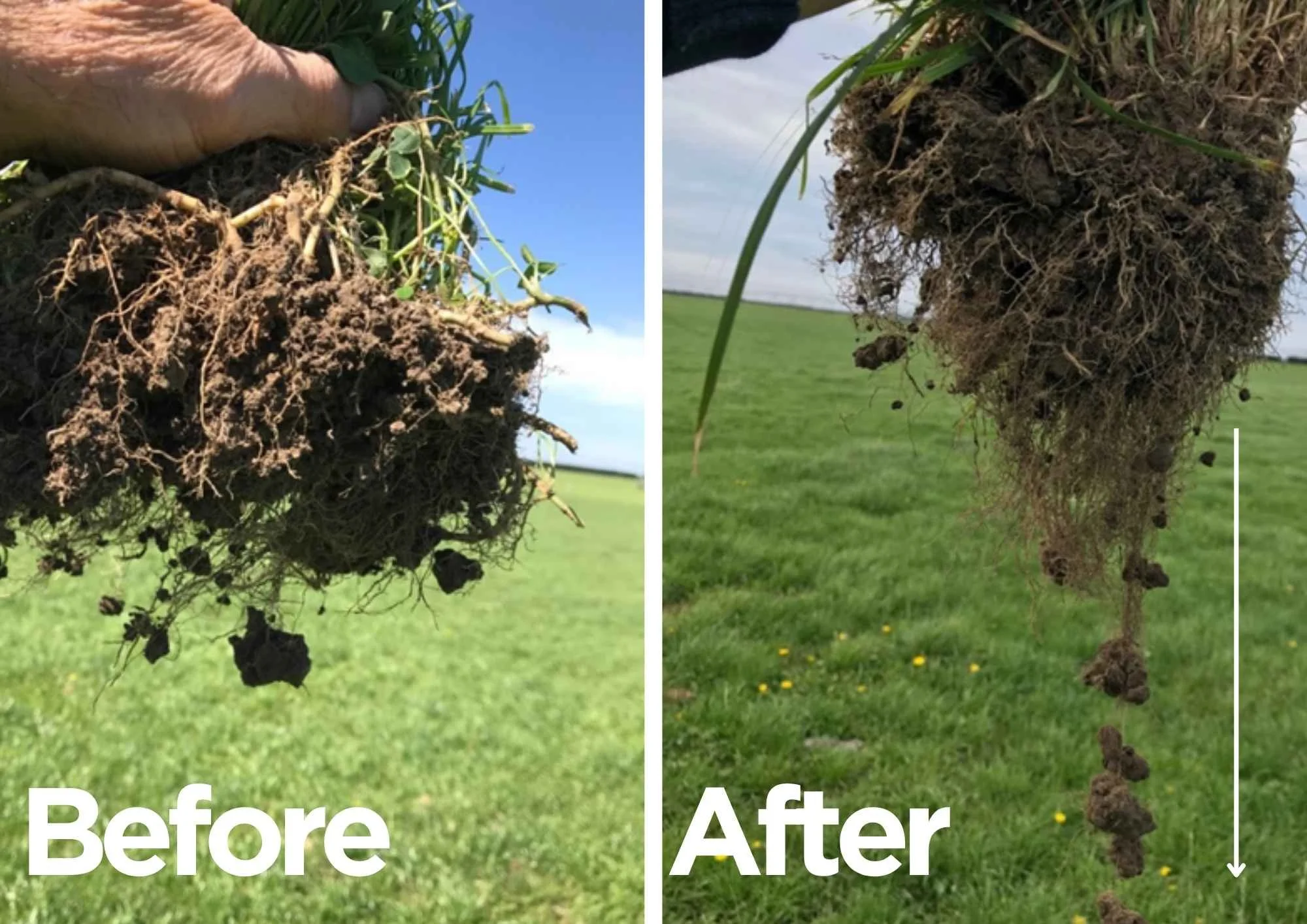
These photographs provide supporting visual evidence of changes observed in the field.
They are separate field examples and should not be confused with the 10-paddock measurement dataset from which the 62 mm → 105 mm average was calculated.
Why Does Another 43 mm of Root Depth Matter?
The importance isn't simply that the roots became longer.
It's that a deeper root system can explore more of the soil profile.
Pasture obtains most of the water it requires through its roots. New Zealand dairy guidance recognises rooting depth as one of the factors determining how much stored soil water is available to a plant.
The same principle applies to nutrients.
A root system extending through a greater volume of soil has the potential to encounter water and nutrients beyond the volume explored by a shallower root system.
So moving from an average measured depth of:
62 mm
to:
105 mm
doesn't automatically prove better drought tolerance, higher nutrient uptake or greater pasture production.
But it does demonstrate something more fundamental:
The pasture was exploring a deeper part of the soil profile.
What May Help Explain the Result?
We didn't measure the mechanism responsible for the increased root depth.
But the starting condition provides an important clue.
Physical Restriction
Soil compaction and mechanical resistance can restrict root development.
The initial shallow and lateral root growth, together with the visual and penetrometer assessment, was consistent with physical restriction in the root zone.
If the physical conditions encountered by roots became less restrictive during the following year, that could provide one plausible explanation for their ability to penetrate further into the profile.
Did we demonstrate that mechanism?
Not completely.
A penetrometer was used during assessment, but DCT no longer holds the numerical readings required to quantify a before-and-after change in soil resistance.
We therefore report the physical assessment as supporting evidence rather than claiming a measured percentage reduction in compaction.
Deeper Roots and Water Access
This is one of the clearest reasons the result matters commercially.
Soil acts as a reservoir for plant-available water.
DairyNZ notes that shallow-rooted plants have access to less stored soil water through their root systems than deeper-rooted plants.
That doesn't mean this case proves improved drought resilience — pasture performance under drought wasn't measured.
It means that greater effective rooting depth potentially gives the pasture access to water held in a larger volume of soil.
That's an important distinction.
Deeper Roots and Nutrient Access
The same principle applies to nutrients.
A larger effective root zone gives plants the opportunity to explore more soil for nutrients.
This can be particularly relevant for mobile nutrients that may move deeper through the soil profile. DairyNZ, for example, identifies deep fibrous rooting as one reason catch crops can take up nitrogen at depth and reduce nitrate-leaching risk.
We did not measure nutrient uptake or nitrate capture in these paddocks.
So we don't claim that deeper roots improved nitrogen-use efficiency in this case.
What we can say is:
A deeper root system increases the volume of soil available for nutrient exploration.
Understanding the Result Through the Four Pillars
DCT looks at agricultural performance through four connected areas:
Soil Function. Root Development. Nutrient Efficiency. Plant Performance.
This case provides particularly strong evidence in one of them.
Root Development — Measured
This is the hero result.
Across the same 10 paddocks:
62 mm → 105 mm
in approximately one year.
Root depth was physically measured.
Soil Function — Assessed
The initial assessment identified shallow lateral rooting, thatch and evidence of physical restriction.
The soil was assessed visually and with a penetrometer.
That provides useful supporting evidence around the physical environment in which the roots were growing.
We don't have sufficient retained data to quantify the change in soil resistance itself.
Nutrient Efficiency — Agronomic Relevance
Greater rooting depth gives plants access to a larger volume of soil from which water and nutrients can potentially be acquired.
Nutrient-use efficiency itself was not measured in this case.
Plant Performance — Not Measured
Deeper rooting has important implications for pasture performance, particularly where access to water or nutrients limits growth.
But pasture dry-matter production, drought response and utilisation were not measured as part of this case.
We therefore don't turn those potential benefits into results that weren't recorded.
What This Case Does — and Doesn't — Show
What was measured
10 Canterbury dairy paddocks
Same paddocks assessed before and approximately one year later
Average root depth: 62 mm → 105 mm
Increase: 43 mm
Approximately 69% greater measured root depth
What was also assessed
Shallow and lateral rooting
Thatch
Visual soil condition
Physical resistance using a penetrometer
Two separate before-and-after photographic field examples
What wasn't measured
Pasture dry-matter production
Water uptake
Nutrient uptake
Nitrate capture
Soil carbon storage
Drought resilience
We therefore don't claim those as outcomes from this case.
Why This Result Matters
A pasture plant can only use the part of the soil its roots can effectively explore.
At the beginning of this case, average measured root depth across the 10 paddocks was:
62 mm
Approximately one year later it was:
105 mm
That's not a theoretical mechanism.
It's a measured change in the part of the plant responsible for accessing the soil.
What that additional rooting depth ultimately contributes to production will depend on soil, weather, nutrient supply, pasture species and management.
But before the pasture can access water or nutrients deeper in the profile, its roots first have to get there.
In these 10 Canterbury paddocks, they did.
Better Farming Starts With Better Understanding
This case doesn't require us to claim that deeper roots automatically produced more pasture, captured more nitrogen or made the farm drought-proof.
The result itself is strong enough:
Average measured root depth increased from 62 mm to 105 mm across the same 10 paddocks in approximately one year.
We know what was measured.
We know what was observed.
And agricultural science helps explain why that change could matter to the wider farming system.
That's the distinction between seeing a result and understanding its significance.
Want to Know What's Happening Below Your Pasture?

Continue Exploring the other foundations:
-
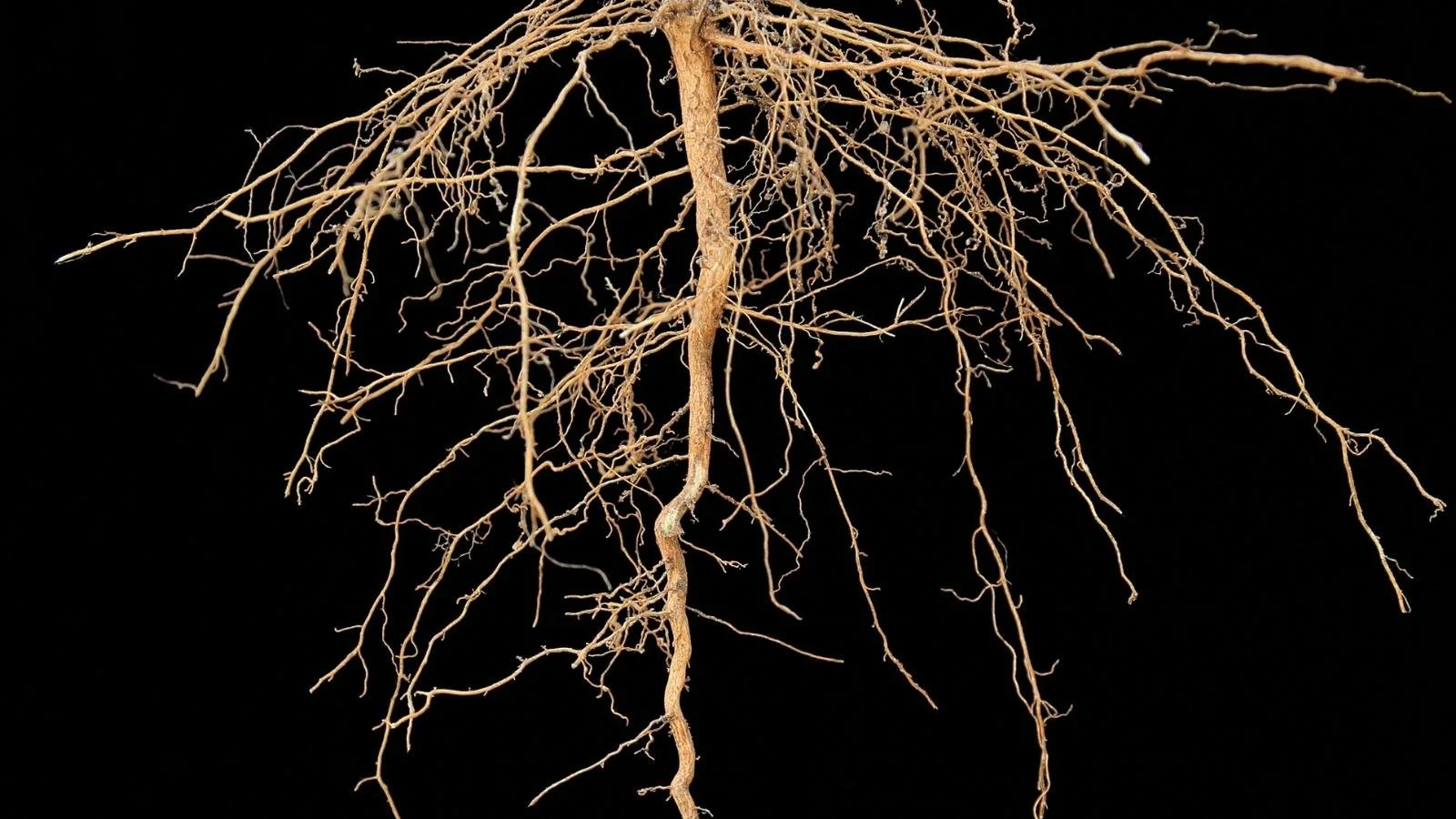
Root Development
Understanding how plants explore the soil for water and nutrients.
-

Soil Function
Understanding the environment where roots, water, nutrients and living processes interact.
-
Nutrient Efficiency
Understanding how farming systems capture and use available nutrients.
-
Plant Performance
Understanding how plants convert available resources into productive growth.