
Why Are My Vines Struggling in Dry Conditions?
Why some vines keep functioning through a dry spell while others begin showing stress much sooner even within the same vineyard.
You can often see where the trouble starts.
A section of the block loses vigour first.
Shoot growth slows.
Leaves begin showing signs of stress.
The canopy doesn't carry the same energy it did earlier in the season.
Perhaps berry development begins to look different too.
The obvious explanation is water.
It hasn't rained enough.
The soil is drying.
The vines need moisture.
And sometimes that's exactly the answer.
But then you look further along the row.
Those vines have had the same weather.
Perhaps the same irrigation.
Yet they aren't struggling to the same degree.
Now the question becomes more interesting.
Is the struggling block short of water — or are those vines unable to access enough of the water that's there?
Dry Soil and a Thirsty Vine Aren't Quite the Same Thing
A vine doesn't experience the vineyard's total water supply.
It experiences the water its roots can reach and extract.
That distinction matters.
There can still be water deeper in the profile while the surface is dry.
There can be moisture beyond the main rooting zone.
And some water can be held so tightly by the soil that roots have difficulty extracting it.
So knowing that a vineyard has received a certain amount of rainfall or irrigation doesn't tell us everything about the vine's actual water supply.
The more useful question is:
How much plant-available water exists within the soil the roots are actually exploring?
That takes us below the vine.
A Vine's Root System Defines the Reservoir It Can Explore
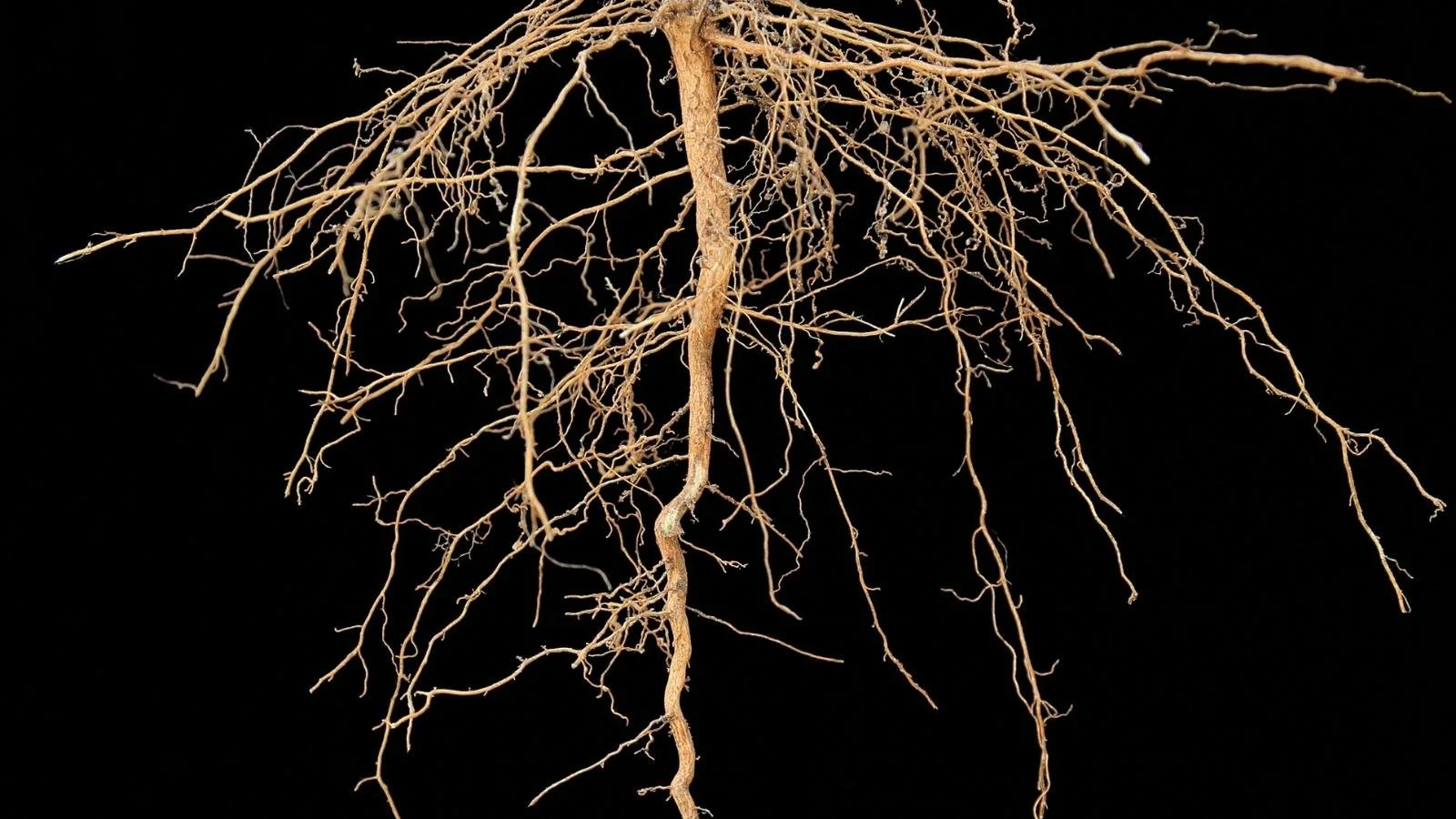
Grapevines can develop substantial root systems when soil conditions allow them to.
Roots don't simply anchor the vine.
They create the connection between the plant and its underground water supply.
Imagine two vines growing through the same dry period.
One has roots distributed through a useful depth and volume of soil.
The other has most of its active roots concentrated much closer to the surface.
As the upper soil dries, the second vine is drawing from a smaller reservoir.
The first may still have access to moisture deeper down.
That doesn't make it immune to drought.
Eventually the deeper profile can dry too.
But it can change when the vine begins experiencing significant water stress.
Which raises another question.
Why would neighbouring vines have such different effective root zones?
Sometimes the Difference Was Created Long Before the Dry Spell
Roots grow where conditions allow them to grow.
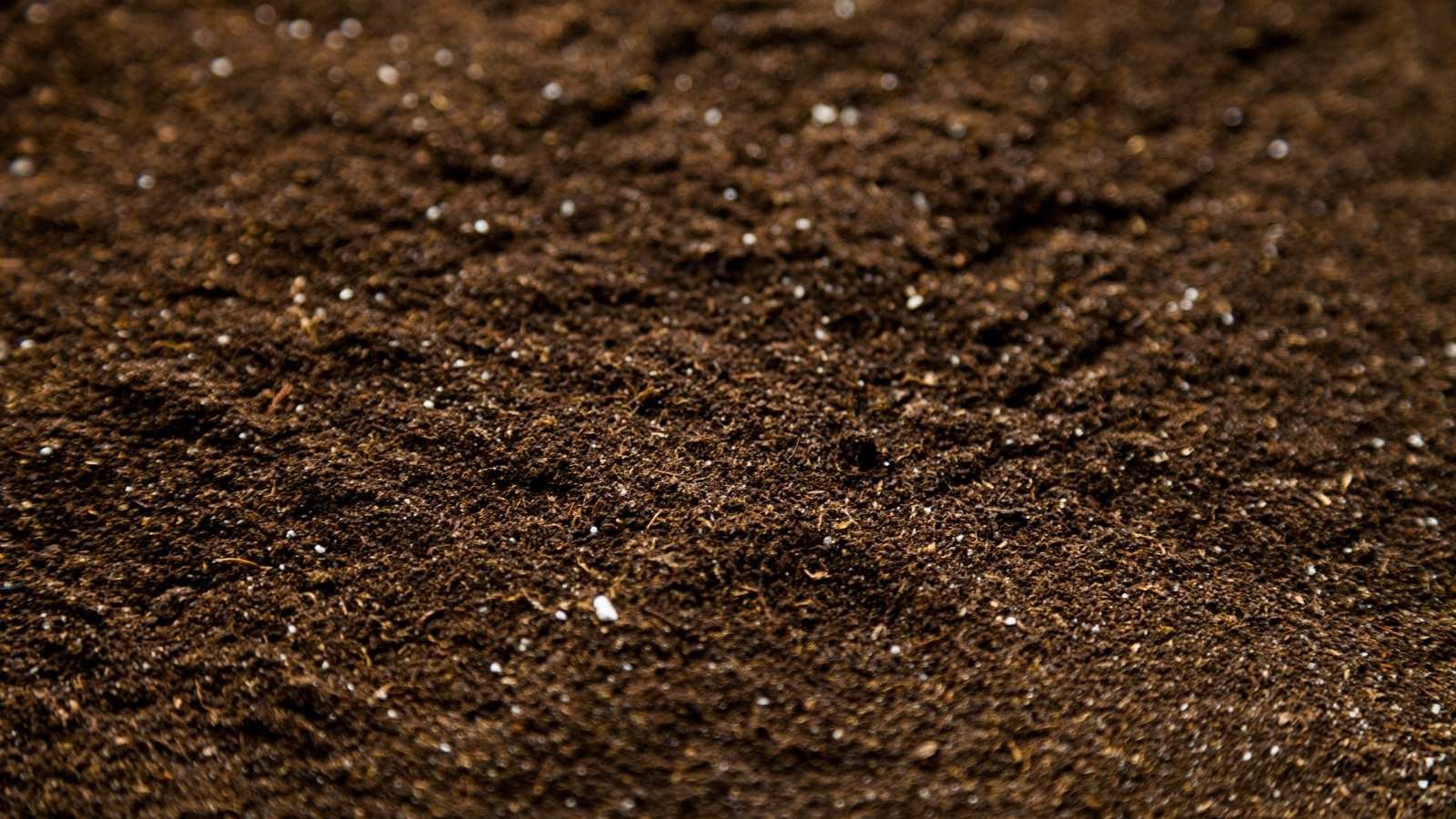
Changes in soil texture can affect both water storage and root development.
A shallow soil may simply offer less volume to explore.
A restrictive layer can limit rooting depth.
Compaction can increase physical resistance and alter the pore space available for roots, air and water movement.
Poor drainage can also influence where roots develop.
Even vineyard establishment and subsequent management can leave differences in soil condition across rows or blocks.
During wetter periods, those differences may not be obvious.
There may be enough water near the surface for both vines.
Then the season dries.
Suddenly the size of the effective root zone matters much more.
Dry conditions can reveal a rooting limitation that wetter conditions were hiding.
And that's why simply looking at the canopy doesn't tell you the whole story.
The Vine Responds Before It Runs Completely Out of Water
A vine doesn't wait until there is no water left before reacting.
As water becomes harder to obtain, the plant begins regulating its use.
One important response is to reduce the opening of the stomata the tiny pores on the leaves through which water vapour escapes and carbon dioxide enters.
Closing them helps reduce water loss.
But there is a trade-off.
Carbon dioxide is required for photosynthesis.
So as stomatal opening is restricted, photosynthesis and growth can also be affected.
Shoot growth may slow.
Canopy development can change.
And prolonged or repeated water stress can influence vine performance beyond the immediate dry period.
This is why a vine can still be alive and green while no longer functioning as it did when water was readily available.
Water stress isn't simply about whether the vine survives.
It's about what the vine has to stop doing in order to survive.
But More Water Isn't Automatically the Whole Answer
If vines are genuinely short of plant-available water and irrigation is available, irrigation can clearly be part of the solution.
But where the vineyard is irrigated, another useful question appears.
Where is that water actually going?
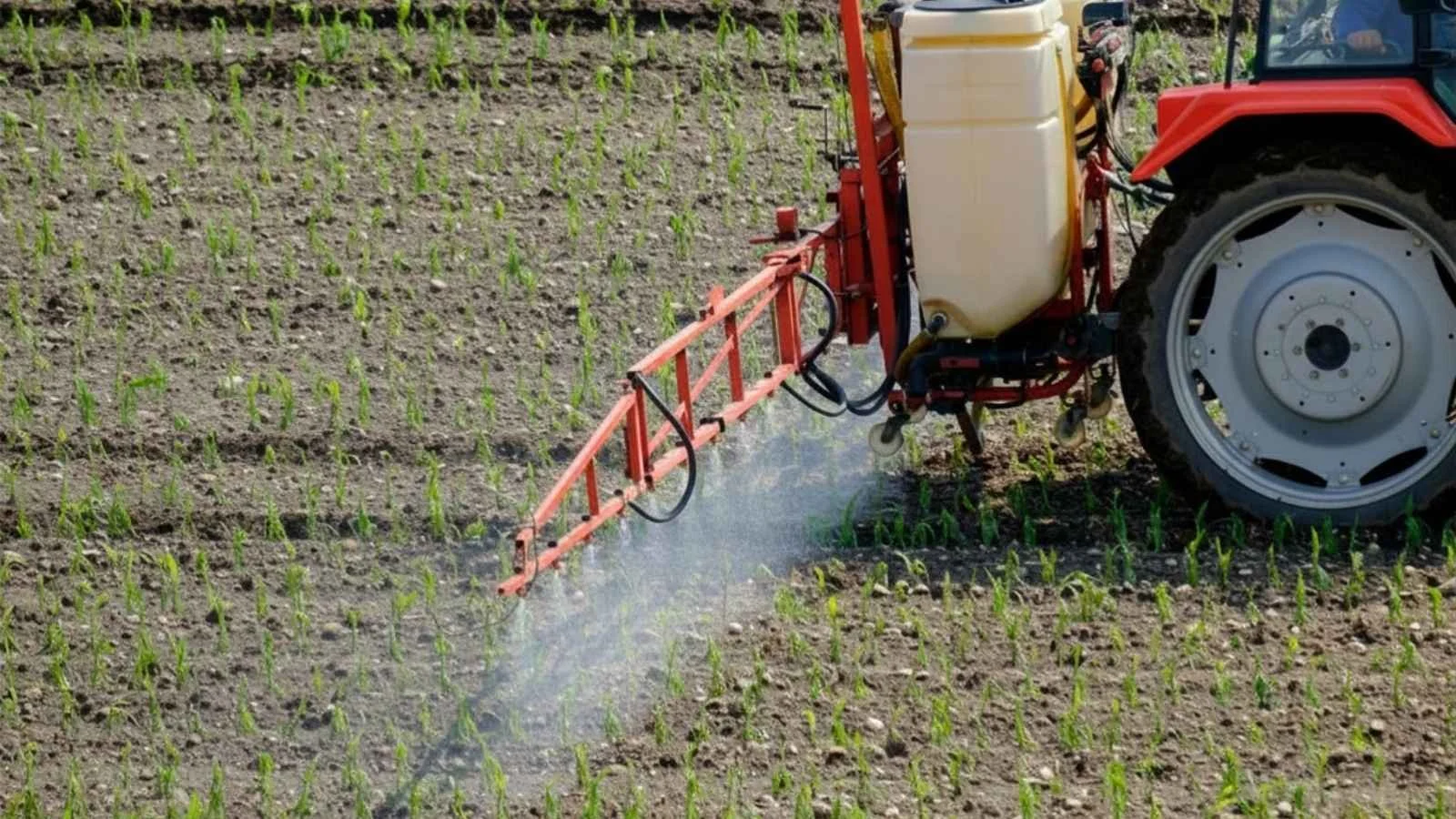
A drip emitter creates a wetted zone.
The size and shape of that zone depend on the soil, application rate and irrigation duration.
If much of the active root system lies outside that wetted volume, the vine may have access to less of the applied water than expected.
If water is applied faster than the soil can absorb it, ponding, runoff or uneven movement can occur.
And if the wetted soil volume is small relative to vine demand, the vine may exhaust that supply quickly during hot conditions.
So irrigation management isn't simply a question of litres applied.
The useful connection is:
Water needs to be available where functioning roots can access it.
For dry-grown vineyards, the same principle applies to rainfall.
The difference is that there is much less control over when the water arrives.
Look for the Pattern Before Blaming the Season
A genuinely severe dry season can affect the whole vineyard.
But uneven stress gives you something to investigate.
Does the struggling area follow a particular soil type?
A terrace?
A slope?
An old traffic lane?
A change in elevation?
Does it begin at one end of the rows?
Do younger vines struggle sooner than established vines?
Is the pattern consistent from one dry season to the next?
If irrigation is present, does the pattern correspond with the system?
Check emitters and pressure before assuming the soil is responsible.
Then look below ground.
Compare a struggling area with one that is holding on better.
How quickly does each soil dry?
Where is moisture still present?
How deep is the effective soil profile?
Where are the roots?
Do they continue downward or become concentrated above a particular layer?
The difference between those two areas can tell you much more than the vineyard average.
Dry Conditions Expose the Size of the Vine's Usable Water Supply
This is the central discovery.
A vine's drought response isn't determined simply by how much rain has fallen or how dry the surface looks.
It depends on the relationship between water demand, plant-available water and the root system capable of reaching it.
Two vines can experience the same weather and respond differently because they don't necessarily have access to the same effective water reservoir.
Vines begin struggling when their demand for water exceeds what their root system can access from the available soil water.
Sometimes the season has simply become dry enough to exhaust the available supply.
Sometimes irrigation isn't supplying enough water, or isn't supplying it where and when the vine needs it.
And sometimes a restricted root zone means the vine has access to a smaller reservoir.
The dry spell creates the pressure.
The vine's effective root zone helps determine how soon that pressure becomes stress.
That Changes What You Investigate
If the whole profile is genuinely dry, the immediate issue is water supply.
If an irrigation fault is creating the pattern, fix the irrigation.
But where some vines consistently struggle sooner despite similar water inputs, investigate what may be limiting their effective root zone and access to available moisture.
That doesn't create water where none exists.
And it doesn't replace irrigation where irrigation is required.
It recognises that drought response depends partly on how effectively the vine can access and use the water available to it.
And that's where DCT enters this story.
Now You Understand Why Our Products Exist
DCT didn't begin with the idea that growers needed another product to make vines tolerate drought.
We began with a broader question:
How can we improve key processes within farming and growing systems so the system as a whole has a better opportunity to perform efficiently?
For more than twenty years, that question has shaped how we've looked at soils, roots, nutrients and plants.
Our products aren't designed to replace irrigation, sound vineyard management, appropriate nutrition or physical remediation where those are required.
They're designed to support key underlying processes that influence how effectively the soil and plant system functions.
Where soil condition, rooting or resource access is part of the limitation, improving those underlying processes can form part of the wider approach.
Depending on your vineyard, what you're seeing and what you're trying to improve, there are different ways to begin.
One Question to Take Back to the Vineyard
The next time a block begins struggling in dry conditions, don't only look at the vines showing the most stress.
Find vines nearby that are handling the same conditions better.
Then compare them.
Look at the canopy.
Check the irrigation if there is one.
Dig into the soil.
Follow the roots.
Look at where moisture remains and whether roots are reaching it.
Then ask:
“What water can these vines actually access that the struggling vines can't?”
The answer may be irrigation.
It may be soil depth or water-holding capacity.
It may be a restrictive layer or rooting difference.
Or the whole vineyard may simply be running out of available water.
But you'll be asking a better question than:
“Do these vines need more water?”
The better question is:
“Why can't these vines access enough water to meet their demand?”
Because drought isn't only about the water that falls on the vineyard.
It's about the water the vine can reach.
Want to Understand the System More Deeply?
-
Root Development
Understanding how plants explore the soil for water and nutrients.
-
Soil Function
Understanding the environment where roots, water, nutrients and living processes interact.
-
Nutrient Efficiency
Understanding how farming systems capture and use available nutrients.
-
Plant Performance
Understanding how plants convert available resources into productive growth.
Not Sure Where to Start?
Tell us what you're applying now, what response you're getting and what you've noticed on the farm. We'll help you work out the most appropriate place to start.