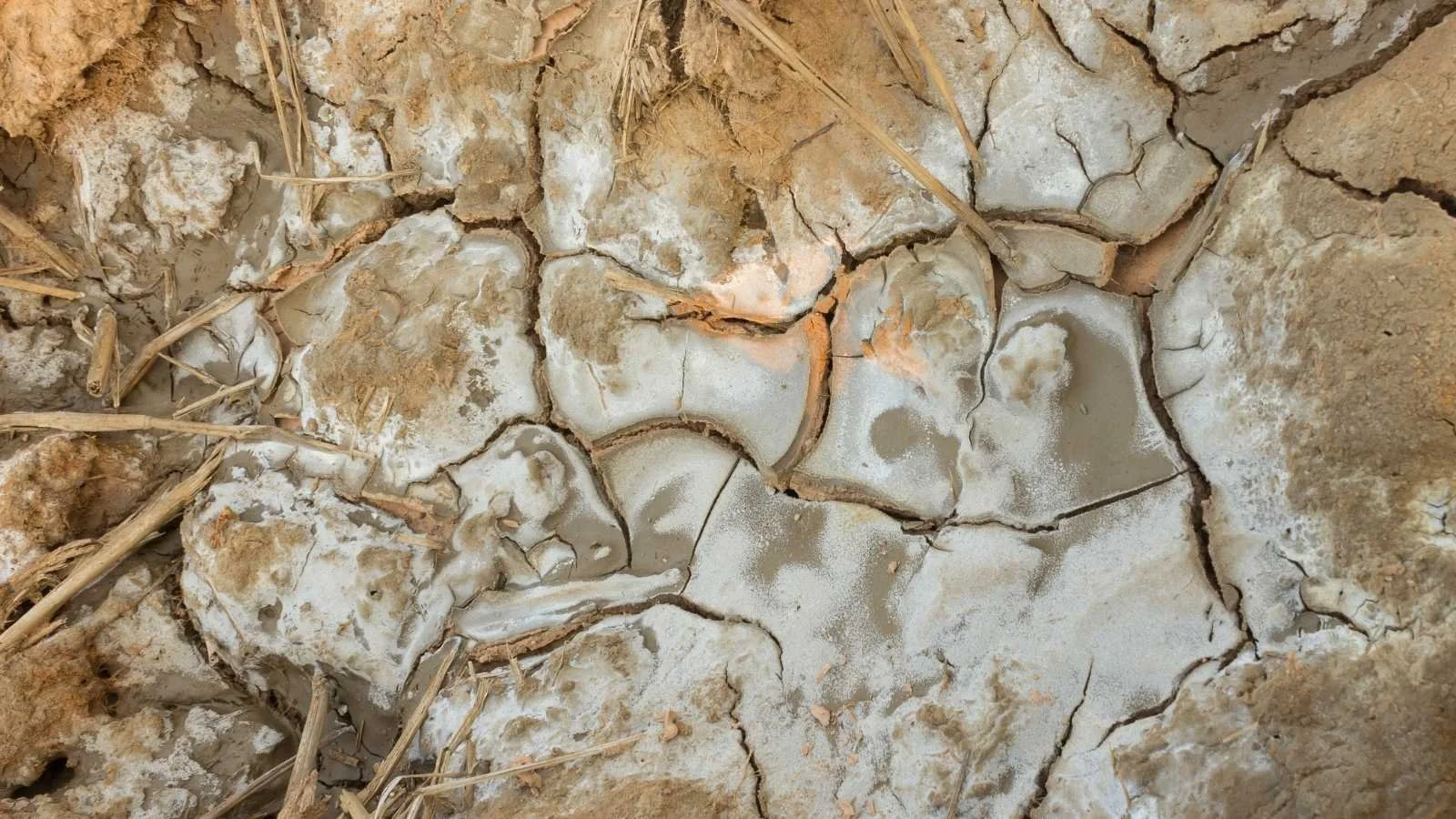
Salt-Affected Soils
Growing Problem Overview
Protecting pastures and crops from salinity stress
Salt-affected soils can severely limit pasture and crop growth. High sodium levels reduce water uptake, restrict root development, and weaken plants, leading to lower productivity.
Many growers are seeing real improvements using our products, with measured reductions in soil sodium and healthier, more resilient pastures — often without costly mechanical interventions.
Why salt-affected soils develop
Salt stress typically occurs due to:
Irrigation or high rainfall
Excess water can mobilise salts into the root zone, especially in low-draining soils.
Poor drainage
Compacted or dense soils prevent salts from leaching naturally, increasing sodium accumulation.
Low organic matter and weak soil structure
Without strong aggregation, water movement is restricted, and salts concentrate near roots.
Slow microbial recovery
Limited soil biology reduces natural nutrient cycling and soil buffering capacity, exacerbating salt stress.
When these factors combine, pastures struggle to establish or recover, and crops may underperform.
Why standard approaches sometimes fail
Mechanical remediation or leaching alone may provide short-term relief but rarely addresses the root cause:
High costs and labour requirements
Temporary improvements if soil biology remains weak
Salinity often returns unless the soil system is strengthened
By improving soil structure, microbial activity, and nutrient cycling, growers can sustainably reduce salt stress.
How to reduce salt stress naturally
Practical approaches include:
Enhancing soil structure to improve water infiltration and salt leaching
Supporting microbial activity to buffer sodium and cycle nutrients
Increasing organic matter to improve cation exchange capacity (CEC)
Encouraging deep, healthy root growth to withstand saline conditions
When combined, these steps allow sodium to be leached from the root zone while maintaining nutrient availability, supporting pasture and crop growth.
Where our products fit (practical tools growers use)
Our products strengthen soils, support microbial activity, and help reduce sodium levels naturally:
Lazerhume
Boosts soil biology and structure, improving water movement and supporting sodium leaching.
Optimise iO
Enhances microbial activity and nutrient cycling, aiding soil recovery and reducing salt impact.
Restore
Provides extra biological support in stressed soils, promoting plant resilience and faster recovery.
Turbo N
Supports nutrient uptake and growth in pastures and crops affected by salinity stress.
Growers using these products consistently have measured substantial reductions in soil sodium, healthier root systems, and improved pasture and crop growth.
When this approach may need extra support
Extremely saline or poorly drained soils may still require drainage planning
Severe salt build-up may take multiple seasons to fully remediate
Low fertility soils will respond more slowly without additional nutrients
Even in these cases, using our products supports long-term soil health and accelerates recovery, often reducing the need for mechanical or chemical remediation.
Related growing problems
Salt-affected soils often occur alongside:
Frequently asked questions
Can these products remove salt from soil?
Yes. Field results show measurable reductions in sodium levels when products are applied consistently, while supporting soil health and plant growth.
How quickly will improvements be seen?
Visible pasture recovery and soil function can improve within weeks, with sodium reductions measured over 1–2 years.
Do these products replace drainage planning?
Not completely. For extremely saline or poorly drained soils, combining biological support with good drainage planning is recommended, but many soils respond well without additional mechanical interventions.
Key takeaway
Salt stress limits growth, but supporting soil biology, structure, and nutrient cycling enables natural sodium reduction, improved water movement, and healthier plants. Using our products is a proven, field-tested way to restore salt-affected soils and protect long-term pasture and crop performance.
Salt-Affected Soils
Related evidence & results:
Salt-Affected Soils — Field Results & Agronomic Interpretation — explore how biological support improves salt tolerance and soil function.
Discover solutions to the most common pasture, crop, and soil problems.
Visit our Growing Problems Hub to explore all growing challenges and practical solutions for healthier, more productive pastures, crops & vines.