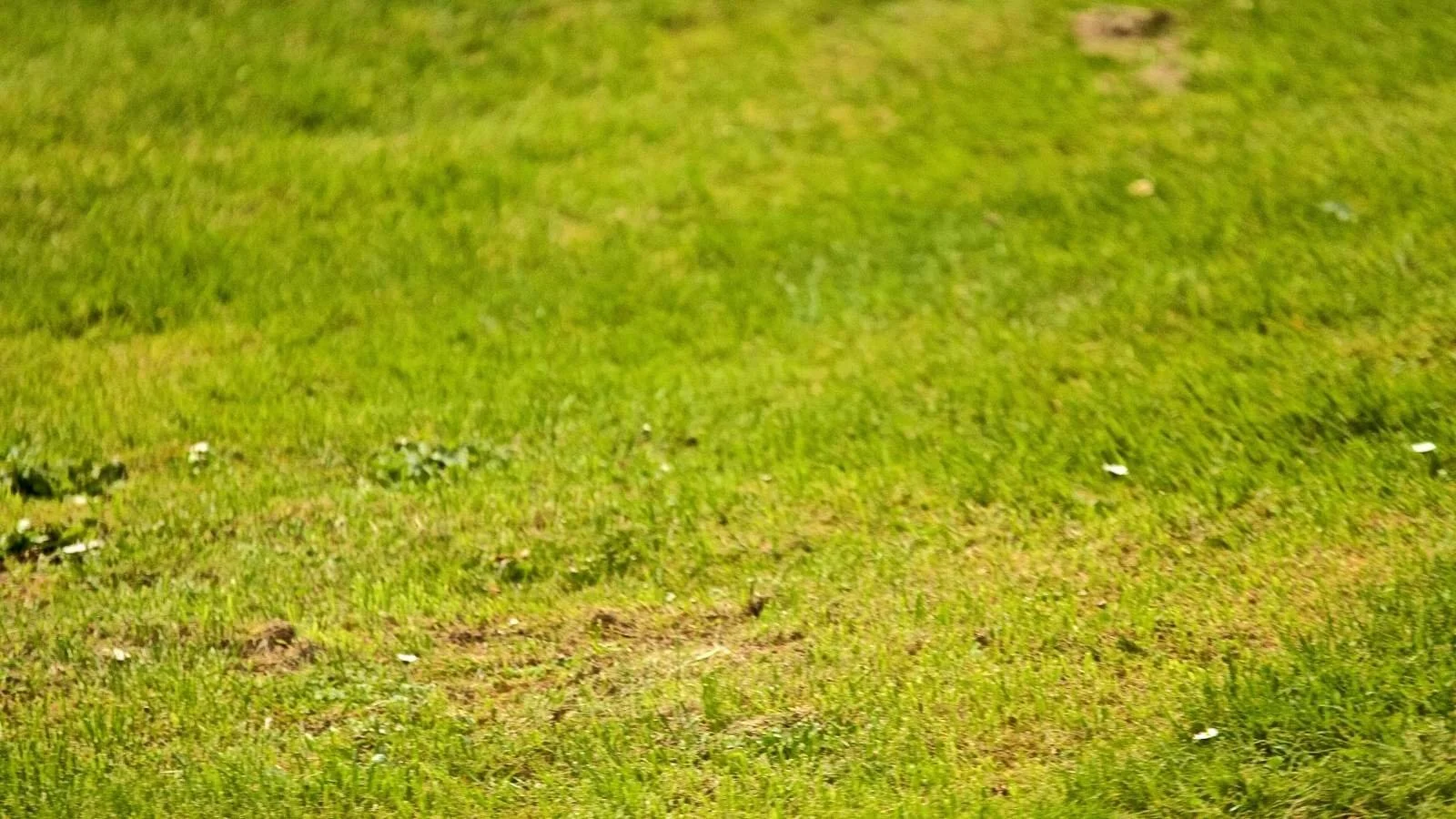
Why Are My Crops Establishing Unevenly?
Why seed sown across the same field can emerge at different times, grow at different rates or fail to establish at all.
You finish drilling and, from the cab, the field looks uniform.
Same seed.
Same drill.
Same day.
Same intended depth and rate.
Then the crop begins to emerge.
One area comes through evenly.
Another is patchy.
Some rows look strong while others contain gaps.
In places, seedlings are already moving.
A few metres away, they're only just appearing.
Naturally, attention turns to the seed.
Was germination poor?
Was the drill rate wrong?
Was there a problem with the seed lot?
Those are legitimate questions.
But if the same seed establishes well in one part of the field and poorly in another, the difference may have been created somewhere else.
Because putting seed into the ground isn't the same as establishing a crop.
What happened around that seed after it was placed there?
Every Seed Needs a Similar Start
For establishment to be uniform, neighbouring seeds need reasonably similar conditions.
They need to be placed appropriately.
They need contact with the surrounding soil.
They need enough moisture to begin germination.
They need suitable temperature.
And once germination begins, the emerging seedling needs to make it through the seedbed and establish its first roots.
Small differences during this stage can create surprisingly visible differences later.
A seed placed slightly deeper may take longer to emerge.
A seed surrounded by dry soil may wait for moisture.
Poor seed-to-soil contact can make moisture uptake less reliable.
A seedling beneath a hard surface crust may germinate but struggle to emerge.
So when a crop appears uneven above ground, the cause may have begun before there was anything above ground to see.
That makes the pattern itself useful evidence.
Start With Where the Difference Appears
Uneven establishment isn't one diagnosis.
Look at its shape.
Does poor establishment follow particular rows?
Check drill performance, seed placement and depth.
Does it follow wheel tracks or headlands?
Traffic and compaction deserve attention.
Does it occur on heavier or wetter parts of the field?
Think about soil condition at drilling and what happened afterwards.
Does it correspond with cloddy areas, depressions or changes in soil type?
The seedbed may have been less uniform than it appeared from the surface.
Are seedlings missing completely?
Or are they simply late?
That distinction matters too.
A seed that never germinated presents a different investigation from one that germinated but couldn't emerge, or one that emerged normally and then declined.
Don't begin with the average field. Begin with the pattern.
It can tell you where to dig.
A Seedbed Isn't Just Somewhere to Put Seed
A good seedbed does more than hold the seed at the correct depth.
It creates the physical environment in which germination and emergence occur.
Consider two seeds from the same bag.
One is placed at a consistent depth into soil that settles closely around it.
The other ends up beside a large clod with an air gap around part of the seed.
Rain falls.
The first seed has good contact with moist soil.
The second may experience a very different moisture environment.
Or perhaps the planter moves across rough ground and begins bouncing.
Now seed depth and spacing become less consistent.
Or the seedbed has been worked when conditions weren't suitable, leaving clods in one area and finer soil in another.
The seeds are genetically similar.
Their starting environments aren't.
And establishment records those differences.
Moisture Has to Reach the Seed — at the Right Time
Germination begins when a viable seed takes up enough water.
That makes moisture around the seed critical.
Not simply whether the field has had rain.
Whether moisture is available where the seed is sitting.
A shallow seed may be placed into soil that dries quickly.
A deeper seed may reach more reliable moisture but have further to travel before emergence.
Loose or cloddy soil can interrupt contact between the seed and moist soil.
And if conditions become too wet, lack of oxygen and increased disease pressure can create a different establishment problem.
This helps explain why one rainfall event can produce different outcomes across the same field.
Rain may have fallen across the field.
But the seedbed did not necessarily capture, hold and supply it uniformly.
So when establishment varies, dig before the evidence disappears.
Where exactly is the seed relative to the moisture?
The Drill Can Place the Seed Correctly and the Soil Can Still Work Against It
Sometimes the seed is where it should be.
But the physical environment around it has changed.
A hard surface crust after rain can create resistance above an emerging seedling.
Compacted soil can restrict roots below it.
Planting into soil that is too wet can smear or compress the sides of the seed slot, creating a physical barrier as the young roots try to move outward.
Wheel traffic can create another pattern entirely.
These restrictions don't always stop every plant from emerging.
Sometimes they delay emergence.
Sometimes the seedling appears but its early root system is restricted.
That creates an important point.
Uniform emergence is not only about getting plants through the surface.
It is about giving those plants a reasonably uniform opportunity to establish below it as well.
Because once neighbouring plants begin the season differently, the gap can become difficult to close.
Late Plants Don't Simply Join the Crop Later
Imagine two neighbouring seedlings.
One emerges first and begins developing leaves and roots.
The second appears several days later.
By then, the first plant already has a head start.
It can intercept more light.
Develop a larger root system.
Access water and nutrients sooner.
As the canopy develops, the late plant is no longer growing beside an equal neighbour.
It is competing with a larger one.
The effect varies with crop, timing and conditions, but the principle is important:
Uneven emergence can become uneven competition.
That is why establishment quality isn't simply about achieving an acceptable final plant count.
Two crops can eventually contain a similar number of plants while having very different levels of uniformity.
The timing matters too.
Sometimes It Isn't the Seedbed
A strong diagnosis also needs to know when to look elsewhere.
Seed quality and germination can matter.
Pests may remove seed or damage emerging plants.
Seedling diseases can affect establishment, particularly under favourable conditions for infection.
Herbicide or fertiliser injury may sometimes create characteristic patterns.
Cold conditions can slow emergence.
Very wet conditions can reduce oxygen around germinating seed.
So uneven establishment shouldn't automatically be labelled compaction or poor soil structure.
The useful question remains:
Why did this seed have a different start from the seed beside it?
Often, the quickest way to investigate that is to find both.
Dig Where the Crop Changes
Find the boundary between good establishment and poor establishment.
Not the middle of the best area.
Not the middle of the worst.
The transition.
Then dig on both sides.
Are seeds at the same depth?
Is moisture similar?
Is the soil packed differently around the seed?
Are there large clods or air spaces?
Has a surface crust formed?
Do young roots move freely away from the seed, or turn when they meet resistance?
Can you see evidence of pests, disease or seedling injury?
And does the pattern correspond with traffic, cultivation or changes in soil condition?
This comparison is powerful because much of the variation has been removed.
Same crop.
Same weather.
Often the same sowing operation.
Yet one area established and the other didn't.
The difference between them is where the investigation becomes useful.
Uneven Crops Usually Started With Uneven Conditions
That's the central discovery.
When the same crop establishes differently across a field, something important differed during germination, emergence or early root development.
It may have been seed placement.
Seed-to-soil contact.
Moisture.
Physical resistance.
Temperature.
Pests or disease.
Or another establishment constraint.
But the visible crop is often showing you the consequence of something that happened earlier.
Uneven establishment occurs when neighbouring seeds and seedlings don't receive a sufficiently similar opportunity to germinate, emerge and establish.
That changes the question.
Instead of simply asking:
“Why didn't all my seed come up?”
ask:
“What was different about the starting environment where establishment failed?”
Once you identify that difference, the next decision becomes much more precise.
The Opportunity Is to Make the Starting Environment More Consistent
Sometimes that means correcting drill setup or planting depth.
Sometimes it means waiting for more suitable soil conditions.
Sometimes pests, disease or seed quality need attention.
And where soil condition is creating uneven moisture, compaction or physical resistance, improving the environment in which seeds and roots establish may form part of the wider approach.
The objective isn't to make every square metre of a field identical.
It is to reduce avoidable differences that give parts of the crop a poorer start.
And that's where DCT enters this story.
Now You Understand Why Our Products Exist
DCT didn't begin with the idea that growers needed another product to make seed germinate.
We began with a broader question:
How can we improve key processes within farming and growing systems so the system as a whole has a better opportunity to perform efficiently?
For more than twenty years, that question has shaped how we've looked at soils, roots, nutrients and plants.
Our products aren't designed to replace quality seed, accurate drilling, appropriate cultivation, good pest and disease management or sound agronomic decisions.
They're designed to support key underlying processes that influence how effectively the soil and plant system functions.
Where the establishment problem is connected to soil condition, rooting or the plant's ability to access water and nutrients, that broader approach can become relevant.
Depending on your growing system, what you're seeing and what you're trying to improve, there are different ways to begin.
One Question to Take Back to the Paddock
When an emerging crop looks uneven, resist the temptation to inspect only the worst patch.
Find the line where good establishment becomes poor.
Then dig on both sides.
Find the seed.
Find the roots.
Look at depth.
Moisture.
Seed-to-soil contact.
Physical resistance.
And any sign that the seedling was damaged after germination.
Then ask:
“What changed here?”
Because the same seed going through the same drill doesn't guarantee every seed received the same start.
The better question isn't simply:
“Why is this crop uneven?”
It's:
“What was different about the starting environment where these plants fell behind?”
Find that difference and you have a much better place to start.
Want to Understand the System More Deeply?
-
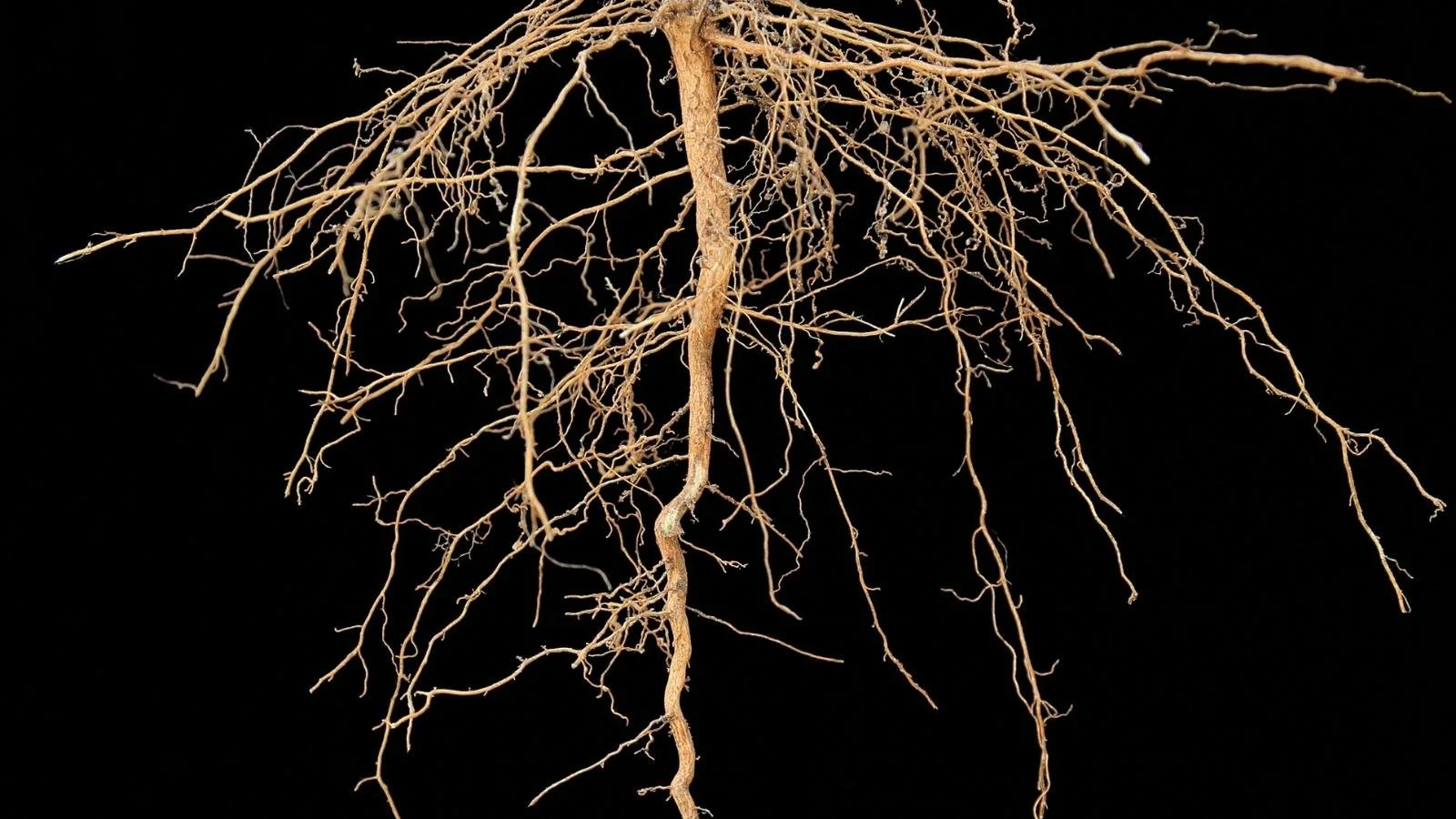
Root Development
Understanding how plants explore the soil for water and nutrients.
-
Soil Function
Understanding the environment where roots, water, nutrients and living processes interact.
-
Nutrient Efficiency
Understanding how farming systems capture and use available nutrients.
-
Plant Performance
Understanding how plants convert available resources into productive growth.
Not Sure Where to Start?
Tell us what you're applying now, what response you're getting and what you've noticed on the farm. We'll help you work out the most appropriate place to start.