Why Are Some Pine Trees Establishing Better?
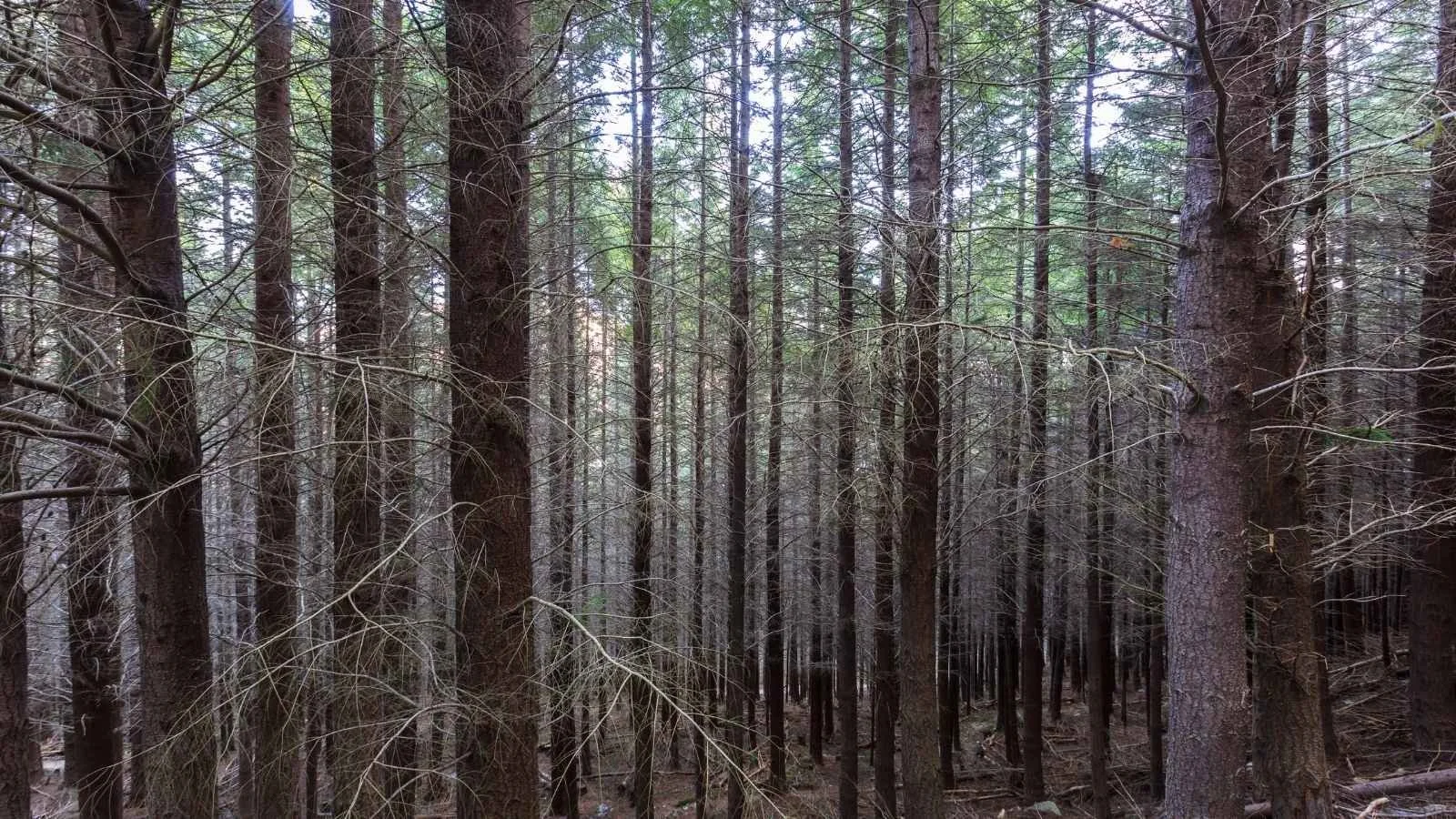
When trees from the same planting begin establishing differently, the pattern across the site can help reveal what is happening.
You don't always notice establishment variability one tree at a time.
Sometimes you see it when you look across the block.
One part of the planting is moving ahead.
Another is behind.
Trees on one slope appear stronger.
A wetter hollow looks different.
Growth changes around an old track or disturbed area.
Or weaker trees seem scattered through the stand with no obvious pattern at all.
The trees may have been planted at roughly the same time, from the same planting stock and under broadly the same programme.
Yet they aren't establishing equally.
That pattern is information.
Before asking what the weaker trees need, there is another question worth asking:
Why are the stronger trees doing better?
The answer can tell you much more about what is happening across the site.
Planting a Tree Isn't the Same as Establishing One
A seedling arrives on site with a relatively small root system.
Planting puts that tree into the ground.
Establishment is what happens next.
The tree has to begin developing roots into a much larger and more variable soil environment.
Those roots need access to water and nutrients.
The tree needs to maintain normal plant function while adapting to changing moisture, temperature and site conditions.
At the same time, it may be competing with surrounding vegetation for resources.
That makes establishment a transition.
From a nursery-grown seedling to a tree functioning within the forestry site around it.
Some trees make that transition more successfully than others.
Understanding why starts with the pattern.
First, Read the Pattern Across the Site
Before looking closely at individual trees, stand back.
Where is establishment weaker?
Does it follow a particular part of the block?
A ridge?
A hollow?
A particular slope or aspect?
A change in soil depth or soil type?
A wetter or drier area?
An old track, landing or area affected by machinery?
An area with heavier competing vegetation?
Does the pattern follow particular planting lines?
Or is weaker establishment scattered randomly throughout the stand?
Different patterns can point the investigation in different directions.
If performance changes with the landscape, site conditions become interesting.
If it changes with soil or moisture, the growing environment becomes interesting.
If it follows planting lines or parts of the planting operation, planting practice becomes interesting.
If individual poor trees are scattered randomly through an otherwise uniform stand, planting stock, damage, browsing or other individual-tree factors may deserve closer attention.
The objective isn't to diagnose the problem from a distance.
It's to identify where to look next.
Then Check the Obvious Explanations
Some establishment problems have straightforward causes.
Those should be investigated first.
Planting Stock
Were the seedlings healthy and reasonably uniform when they arrived?
Some variation can begin before the trees ever reach the forestry site.
Planting Quality
Good planting stock can still struggle if planting technique is poor.
Planting depth, root placement, soil contact and planting quality can all influence what happens after planting.
Vegetation Competition
A young tree begins with limited access to the soil around it.
Competing vegetation can place additional pressure on available water, nutrients and growing space during establishment.
Browsing, Pests or Damage
If trees are being damaged, browsed or affected by pests or disease, that needs to be identified and managed directly.
Nutrition
Where an identifiable nutrient deficiency is limiting tree performance, that needs an appropriate nutritional response.
Foliar testing, supported by appropriate site and soil information, can help where nutrition is suspected.
These are important checks.
But sometimes they don't explain all of the variation.
And that's where the site itself becomes more interesting.
What Changes Where Tree Performance Changes?
Once you have identified stronger and weaker areas, compare them.
Not simply tree against tree.
Site against site.
Is the soil different?
Does one area appear more physically restrictive?
Does soil depth change?
Does one part of the block retain moisture longer?
Does another dry out faster?
Is competing vegetation different?
Is there evidence of machinery traffic or previous site disturbance?
Does the landform change?
Is drainage different?
Are there visible differences in tree colour, leader growth, stem development or overall uniformity?
And where inspection is practical, does root development appear different?
You may find one clear explanation.
But you may also find several smaller differences interacting.
That's important because the tree doesn't experience soil, water, roots and nutrition as separate management categories.
It experiences one growing environment.
The Tree Can Only Explore the Soil Its Roots Can Reach
A newly planted tree begins with a relatively small root system.
That means the volume of soil it can effectively explore is initially limited too.
As roots develop and extend into the surrounding soil, the tree has the opportunity to explore a greater volume of that environment.
That matters because the surrounding soil contains resources the tree depends on.
Water.
Nutrients.
Air.
Space for further root development.
But roots don't develop independently of the conditions around them.
Physical soil conditions can influence root exploration.
Moisture can influence plant function and nutrient movement.
Nutrient availability matters.
Competition matters.
And the tree itself needs to keep functioning while its root system develops.
This doesn't mean every forestry site needs physical soil intervention.
The important question is whether a genuine soil limitation exists and whether it is affecting tree establishment.
So when trees from the same planting establish differently, the question isn't necessarily:
“What should we add to the weaker trees?”
A better question may be:
“What is different about the environment the stronger trees are establishing into?”
The Difference Above Ground May Have Started Below It
Imagine two areas within the same planting.
The trees began at roughly the same time.
They received broadly similar management.
But one area is establishing more strongly.
The visible difference is above ground.
The reason for it may not be.
If roots in one area can explore the surrounding soil more effectively, those trees may have a different opportunity to access water and nutrients.
If another area is physically restrictive, unusually wet, prone to drying, nutritionally different or under greater vegetation competition, the developing trees face a different environment.
This doesn't mean every smaller tree has a root or soil problem.
It means that where establishment follows a repeatable site pattern, what is happening below ground deserves attention.
Roots, Water, Nutrients and Tree Performance Are Connected
Forestry management needs to measure and manage individual factors.
The tree experiences them together.
Consider a developing root system growing into a restrictive soil environment.
If root exploration is limited, the tree may have access to a smaller effective volume of soil.
That can affect its opportunity to access moisture.
It can also affect its opportunity to access nutrients.
Moisture conditions can influence nutrient movement and uptake.
Plant function influences further growth.
Further root development changes the volume of soil the tree can explore.
Meanwhile, the tree is still responding to weather, competition and the conditions of the site.
These processes interact.
That's why adding more of one input doesn't automatically correct every reason a tree may be establishing slowly.
Sometimes the more useful question is:
How effectively is the tree able to use the environment and resources already around it?
Why Establishment Uniformity Matters
One smaller tree doesn't tell you very much.
Forestry operates across populations.
Hundreds of trees per hectare.
Thousands across a planting programme.
Potentially hundreds of thousands across a larger forestry operation.
That changes the significance of variation.
A handful of individual trees falling behind may have little commercial importance.
But a repeatable establishment difference across part of a block is different.
It may influence:
survival
replacement requirement
height development
stem development
uniformity
subsequent management
the population available for future crop-tree selection
The question isn't whether every tree can be made identical.
It is whether avoidable limitations are causing a meaningful part of the tree population to establish below its potential.
That's worth understanding.
This Is Where DCT Forestry Becomes Relevant
DCT Forestry isn't designed to correct poor planting.
It isn't a treatment for browsing, pests or disease.
And it doesn't replace appropriate fertiliser where testing identifies a specific nutritional requirement.
Those problems should be dealt with appropriately.
But where establishment appears to be influenced by the wider relationship between roots, nutrients, plant function and the environment around the tree, DCT Forestry becomes relevant.
DCT Forestry was designed around three connected areas that matter to tree development.
ROOT
The developing root system and the tree's opportunity to explore the surrounding soil.
NUTRITION
Nutrient availability, uptake and utilisation.
PLANT
Plant function as the tree develops through changing growing conditions.
These aren't three separate parts of the tree's environment.
They interact.
The DCT Forestry formulation is designed to support this wider soil–root–nutrient–plant system.
Developed for Forestry. Not Adapted to It.
DCT Forestry isn't an agricultural product that has simply been given a forestry recommendation.
DCT has worked with pine tree production and a specialist pine nursery for approximately 15–20 years.
That experience has helped shape how we think about roots, nutrition, plant function and the environment in which forestry trees develop.
Forestry was part of the product's design from the beginning.
But that doesn't mean we think a forestry operation should simply accept that the approach will create value on its site.
Measure it.
Turn Establishment Into Something You Can Compare
If you want to evaluate DCT Forestry, a defined comparison can provide a practical starting point.
Select an appropriate area.
Establish a treated population.
Retain a suitable untreated comparison.
Keep other management as comparable as practical.
Then measure the population rather than looking for exceptional individual trees.
Depending on the stage of establishment and the objective of the programme, measurements might include:
survival
replacement requirement
height development
leader growth
root-collar or stem diameter
tree uniformity
visual development
root development where practical
The purpose isn't simply to demonstrate that something changed.
The more useful questions are:
Is the difference repeatable across enough trees to matter?
And:
Does the difference have commercial value?
So Why Are Some Pine Trees Establishing Better?
There may be an obvious explanation.
Planting stock.
Planting quality.
Vegetation competition.
Browsing.
Pests.
Nutrition.
Site variation.
Those should be investigated.
But where the obvious explanations don't tell the whole story, look at the pattern across the site.
Where does performance change?
What changes with it?
What can the roots of the stronger trees explore?
How do soil and moisture conditions compare?
Are there differences in competition or site history?
Are the stronger trees showing a repeatable population-level advantage?
Then ask the question that matters:
What is allowing these trees to establish better?
That moves the investigation away from simply treating the weaker tree.
It starts to reveal the conditions associated with stronger establishment.
And some of those conditions may be things that can be influenced.
Now You Understand Why DCT Forestry Exists
DCT Forestry wasn't designed simply to make pine trees taller.
It was designed around connected processes that remain important as a tree establishes and develops:
Root function.
Nutrient function.
Plant function.
The objective is to support the wider system the tree depends on.
Not to replace good forestry management.
Not to promise a particular growth response.
And not to assume every site has the same limitation.
The first step is understanding what is actually happening.
Then, where DCT Forestry is relevant, measure whether supporting those underlying processes creates a meaningful difference across the tree population.
One Question to Take Into the Forest
The next time you see uneven establishment, don't start with the worst individual tree.
Look across the planting.
Find where establishment is strong.
Find where it changes.
Then look for the pattern.
Slope.
Aspect.
Soil.
Moisture.
Competition.
Site disturbance.
Planting pattern.
Tree condition.
And root development where it can be practically assessed.
Then ask:
“What changes at the point where establishment changes?”
Because variation across a forest isn't only something to manage.
It can also be the clue that tells you where the opportunity lies.

Continue Exploring the other foundations:
-
Root Development
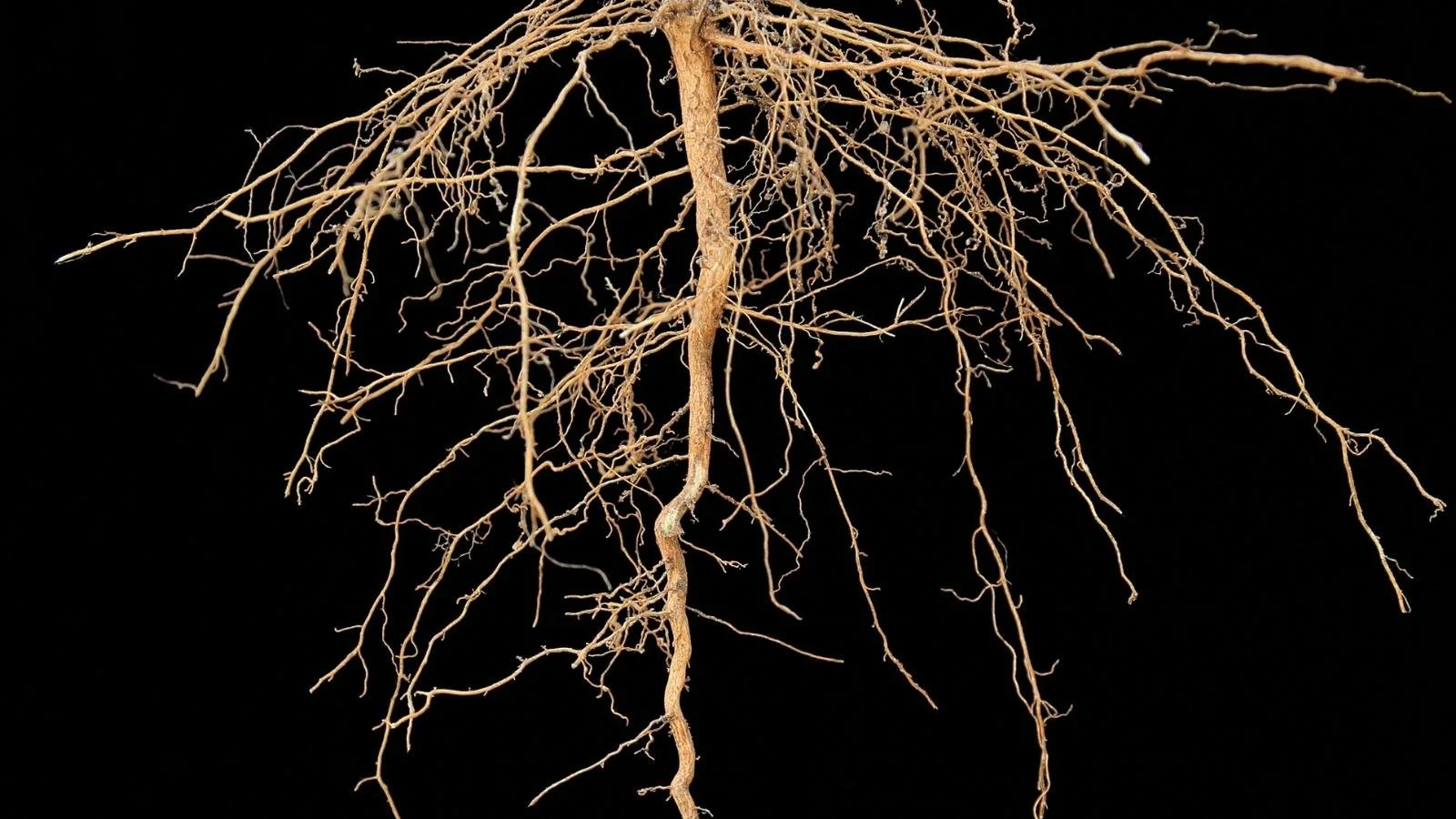
Understanding how plants explore the soil for water and nutrients.
-

Soil Function
Understanding the environment where roots, water, nutrients and living processes interact.
-
Nutrient Efficiency
Understanding how farming systems capture and use available nutrients.
-
Plant Performance
Understanding how plants convert available resources into productive growth.